
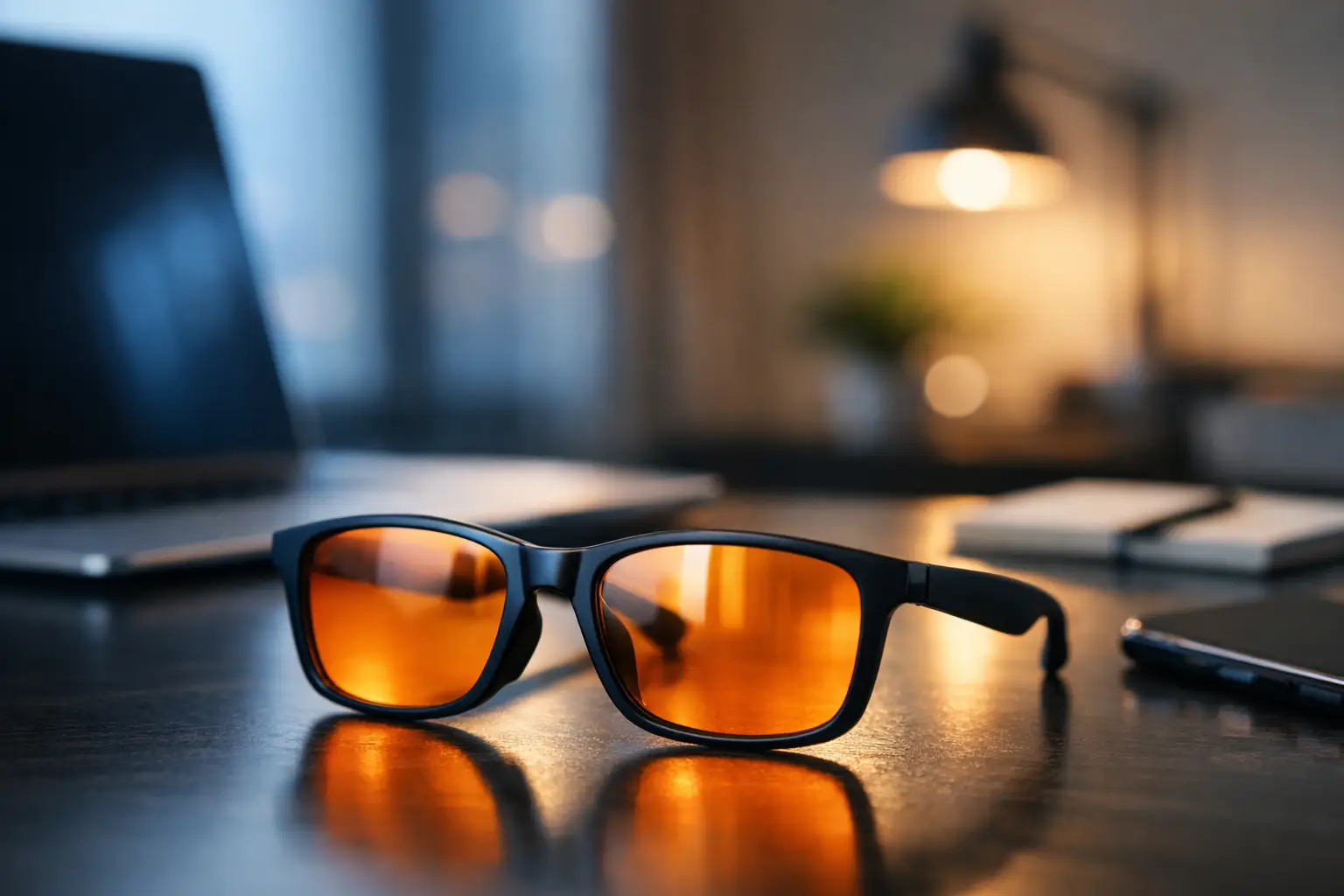
At the end of the day, many people don’t just feel tired – their eyes sting, their forehead is tense, and sleep doesn’t come at the right time. If you work on a computer, study from a screen, or scroll on your phone longer than planned in the evening, this pattern is familiar. This is exactly where blue light filtering glasses come into play, designed to alleviate the side effects of screen time, not just as a style element.
These glasses are not a miracle solution and do not replace good habits, but a properly chosen model can make a noticeable difference in everyday well-being. The question is not just whether the screen is bright, but how long and at what time you use it. If the day starts with a laptop and ends with a phone, the eyes bear more strain than might seem at first glance.
What do blue light filtering glasses actually do?
Simply put, these glasses reduce part of the blue light spectrum emitted by screens. The goal is not to make the world yellow or blur the image, but to help the eyes better tolerate long screen time. For many users, this means less eye strain, less dryness, and a calmer feeling in the evening.
Here it’s worth being honest – not all problems come only from blue light. Eye fatigue is also caused by infrequent blinking, overly bright screens, poor lighting in the room, and long uninterrupted blocks of work. Therefore, glasses work best when they are part of a holistic routine, not the only solution.
Who are these glasses most suitable for?
If your workday is spent in front of a monitor, the answer is quite simple – probably you. Office workers, designers, editors, programmers, marketers, students, and schoolchildren all belong to the group who look at a brightly lit screen closely for hours. The same applies to remote workers whose days easily stretch longer because the boundary between work and home blurs.
Those who especially notice the change are those who feel heaviness in their eyes in the second half of the day or experience a strange alertness in the evening, even though the body should already be calming down. If you can’t sleep well after late computer work or wake up in the morning with tension in your eyes, it’s worth trying glasses with a blue light filter.
If you use screens rather little and mainly during the daytime, the difference may not be as significant. This doesn’t mean glasses are useless, but that the effect depends on usage patterns. The more screen time and the later the hour, usually the more the need.
What is the difference between regular screen glasses and glasses with a stronger filter?
This is where buyers often get confused. Not all blue light glasses filter the same amount. Lightly filtered transparent or gently tinted screen glasses are well suited for daytime work where you want to reduce eye strain but maintain natural color perception. They are practical in offices, schools, and homes where you need to spend several hours in front of a screen.
Models with stronger protection levels, including red-tinted variants, are intended for a different type of use. They are worn more often in the evening when the goal is to reduce the impact of blue light before sleep. For such glasses, the filter is more powerful and color perception changes more, but that is exactly their purpose. If you are still doing last work tasks in the evening or using your phone in bed, a stronger filter may be a much more sensible choice than a light daytime model.
Blue light filtering glasses and sleep
For many, this is the most important topic. Evening screen use does not necessarily make you sleepy; sometimes it even makes you more alert. When the brain gets a lot of bright light in the evening, winding down can take longer. That is why many people look for glasses precisely when they don’t want to give up screens completely in the evening but still want a better sleep routine.
Timing is important here. If you wear filtering glasses only during the middle of the day, the change in sleep quality might not be significant. If you use them consistently in the evening hours, especially a couple of hours before bedtime, the effect is often more noticeable. This is not a black-and-white rule, but in practice, the timing of when you get the screen light matters.
Do they also help with headaches and dry eyes?
For some people, yes; for others, partially. If headaches occur specifically after long screen sessions, the right glasses can help reduce the strain. The same goes for dryness and irritation. But if the cause is the wrong glasses prescription, poor posture, or overly dry air, a blue light filter alone will not solve the problem.
A good rule of thumb is this – if symptoms arise in connection with screen time, it’s worth trying. If symptoms persist even when you don’t use screens, it’s worth looking at the bigger picture. Glasses can be a very good aid, but they do not replace eye exams or healthy work habits.
How to choose the right blue light filtering glasses for yourself?
The choice should start with the usage scenario, not just the frame’s appearance. If you need glasses mainly for the workday, favor a model that is comfortable to wear for several hours in a row. A light frame, good fit, and moderate filter often make the best combination here. If you are looking for a solution mainly for evening use, it’s worth looking at options with stronger filters.
The frame matters more than is initially thought. If the glasses press on your nose, slide down, or feel too heavy, they will just end up in a drawer. Since these are worn daily, the model must suit both your face shape and your style. Function is important, but no one wants to look like they borrowed glasses randomly from the back of the office cabinet.
The lens tint also deserves attention. A very light tint suits those who want a discreet appearance and a natural screen image. A stronger tint is more practical if the goal is to reduce evening light exposure as much as possible. There is no one universal right option – there is the right option for your schedule.
What glasses don’t do
Resistance sells better than over-allowance. Glasses that filter blue light do not improve bad sleep if the daily schedule is completely messed up. They do not erase a 10-hour workday or make dry office air humid. Nor do they solve all headaches.
However, they can make a long screen day more tolerable. And that is not a small thing. If your eyes are less tired in the evening and calming down comes easier, the impact is noticeable in work, studying, and overall well-being.
How to truly benefit from glasses?
The best result usually comes when you use glasses consistently. Not one day in the office and then a week break, but really as part of your daily routine. If you know a long workday is ahead, put the glasses on right at the start, not when your eyes are already red.
At the same time, it is worth keeping screen brightness reasonable, taking breaks, and consciously blinking more. This sounds simple, but these small habits together with glasses give the best result. If you want only one quick fix, expectations may be too high. If you really want better everyday feeling, the combination works best.
Is it worth buying the cheapest model or choosing a higher quality option?
If you wear glasses rarely, a simpler model may seem sufficient. But if you use them for several hours every day, quality differences become noticeable quickly. A more comfortable frame, better finishing, and a more reliable filter directly affect whether you actually wear the glasses or not.
For Estonian buyers, accessibility also matters. If you want fast delivery, clear choice, and certainty that the product is truly created considering the needs of screen users, a specialized selection is more sensible than a random impulse purchase. sininevalgus.ee/ is known in this category precisely because the focus is not on a wide choice of random accessories but on a specific problem and effective solution.
Good glasses don’t have to be ridiculously expensive, but they have to be ones you want to wear. If the model looks good, fits well, and really supports your well-being, it quickly becomes a daily habit. And sometimes a better evening starts with something as simple as glasses put on at the right time.