
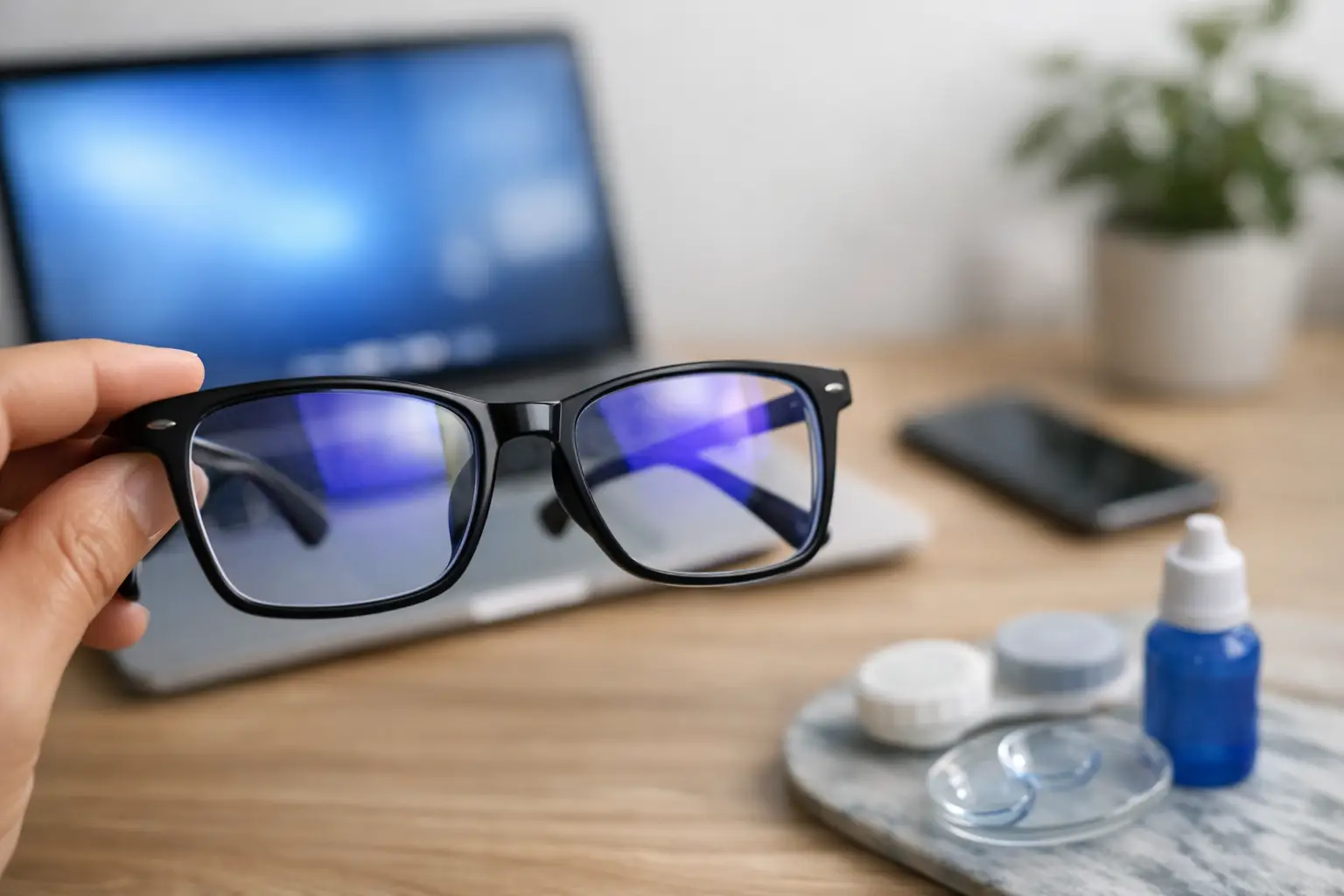
If the day ends with dry eyes, twitchy eyes, or feeling strangely alert even at 11 PM, the problem is not always the workload. Very often, it’s simply that screen time is too much, and the guide to choosing lenses that filter blue light helps to understand which glasses are truly helpful and which just look good.
Lenses that filter blue light are no longer a niche product. They have become a practical everyday tool for people who spend hours in front of a computer, phone, or tablet. But not all lenses work the same way. The difference comes from how much blue light is filtered, when the glasses are worn, and what result is actually desired – less eye strain, a calmer evening, or stronger support for the sleep cycle.
The guide to choosing lenses that filter blue light starts with one question
Before looking at the frame shape or color tint, it’s worth asking yourself one simple thing: when do you use these glasses the most? This will determine almost the entire choice.
If glasses are needed during the workday in the office or home office, generally lighter-toned screen glasses are suitable. They are designed to help reduce eye strain, dryness, and visual load from the screen without changing color perception too much. If you work in design, photography or video, this is especially important, because too strong a tint can start interfering with color accuracy.
If the bigger concern is that you can’t fall asleep in the evening, your head stays too alert, or the phone screen is delaying bedtime, stronger filter solutions are worth considering. This is where darker or reddish-tinted lenses come into play, designed for evening use and higher protection levels.
Many make the mistake of buying one pair of glasses for the whole day and everything. In reality, the right choice depends on the situation. Daytime work glasses and evening stronger filter glasses can serve completely different purposes.
What to really look for in lenses
Product descriptions often have many promises, but for a purchase decision you need a couple of specific things. First, the filter level. If the goal is to relieve screen fatigue, usually a moderate filter is enough. If the focus is on supporting sleep, the filtering should be stronger. It’s not worth choosing based only on price, because too weak a solution might not provide the effect that the person actually expects.
Secondly, look at the lens tint. A clear or slightly yellowish lens is suitable for daytime wear. It leaves the appearance natural and does not make the world too warm. Amber or reddish lens is a more targeted choice for the evening when the goal is to reduce stimulating light load more.
Thirdly, it is worth checking if the lenses have in addition UV-400 protection. This is not the same as blue light filtering, but additional protection is a clear plus for daily use. A good product does not focus only on one keyword but on overall comfort.
Should you choose a clear, yellow, or red lens?
This is the most common question and completely justified. The answer depends on what you expect from your glasses.
A clearer or very subtle tinted lens suits a person who wants to wear glasses all workday long. They act discreetly, look stylish, and are good for meetings, school, office, and everyday computer use. Their strength is comfort and a natural wearing feeling. Their limitation is that they alone may not be enough to support sleep if screen use extends late into the evening.
A more yellow or amber tinted lens is a stronger compromise. It suits those who want more filtering but do not want a very dark or red solution yet. It can be a good choice for those who work long with screens and feel heavy eye strain in the evening.
A red or deeper tinted lens is aimed at a person who takes evening light hygiene seriously. If the goal is to reduce evening brightness and create a clearer signal for the body to rest, then this is a more conscious choice. However, it is usually not the best option for daytime work because color perception changes more and it does not suit everyone in the office.
Frame is not a secondary topic
Glasses can be technically good, but if they don’t fit well, they end up in the drawer. That’s why, in addition to the lenses, the shape, weight, and fit of the frame must also be considered.
A lightweight frame is a big advantage during long workdays. If the glasses press on the bridge of the nose or behind the ears, wearing them quickly becomes annoying. A wider lens covers the field of view better, which is convenient for computer work because the eye does not only look straight ahead but also to the sides. A frame that is too narrow may leave part of the screen outside the filtered viewing area, making the wearing experience not very natural.
Appearance is also important. If the glasses look good, they are worn more consistently. This is not a superficial argument but very practical. People use a product that feels consistent with their style. This is precisely why modern blue light glasses have become so popular – they do not look like a medical aid but like part of everyday style.
When is one pair enough and when not?
If your day mainly consists of computer work and you can limit screens in the evening, one pair of glasses with a lighter filter may be completely sufficient. This is a simple and convenient solution, especially if you want one pair to wear at the office, in lectures, or at home.
However, if your workday ends only when entertainment begins on the screen, it makes sense to consider two different pairs. The first pair for daytime use, the second for the evening with a stronger filter. Honestly, this approach is the most practical for those whose life largely revolves around screens. One product does not need to do everything moderately well if two can do their job properly.
Common misconceptions that make the choice difficult
The first misconception is that the clearer the lens, the better. In fact, a very clear lens often means more modest filtering. If the goal is primarily better sleep, you cannot expect a strong result from glasses designed mainly to alleviate daytime strain.
The second misconception is that all blue light glasses are the same. They are not. Different filter levels, tints, coatings, and frame comfort provide quite different user experiences. That is why you should not base your choice only on where it is cheaper.
The third misconception concerns immediate relief. Glasses can help reduce eye strain and support evening relaxation, but they do not magically resolve all sleep or well-being related issues. If the day includes 12 hours of screen time, few breaks, and bright light even late in the evening, the best result still comes from a combination – the right glasses, reasonable breaks, and a more mindful evening routine.
How to make the right choice without overthinking
A good practical rule is simple. If you need glasses primarily for work, choose high-quality screen glasses with a lighter tint. If you need glasses for evening use and to support sleep, choose tinted or red lenses with a stronger filter. If you need both, don’t force one pair to fulfill two very different roles.
Next, consider wearing comfort. A light frame, the right width, and a design that you actually want to wear are as important as the filter percentage. When the glasses fit well and you like them, they quickly become a habit. And habit is exactly where the real benefit appears.
Finally, prefer a specialized choice. A brand that focuses on blue light glasses usually can more clearly differentiate daytime screen glasses and solutions with higher protection levels. This strength is particularly clear with sininevalgus.ee/ – the selection is built around real use cases, not just around a fashion product.
The right glasses don’t have to make your day more complicated. On the contrary. They should make long screen hours more bearable, evenings calmer, and the choice itself easier. If you choose the lens based on how you really live, not just how the glasses look in a product photo, you get much more from the purchase than just a new accessory.