
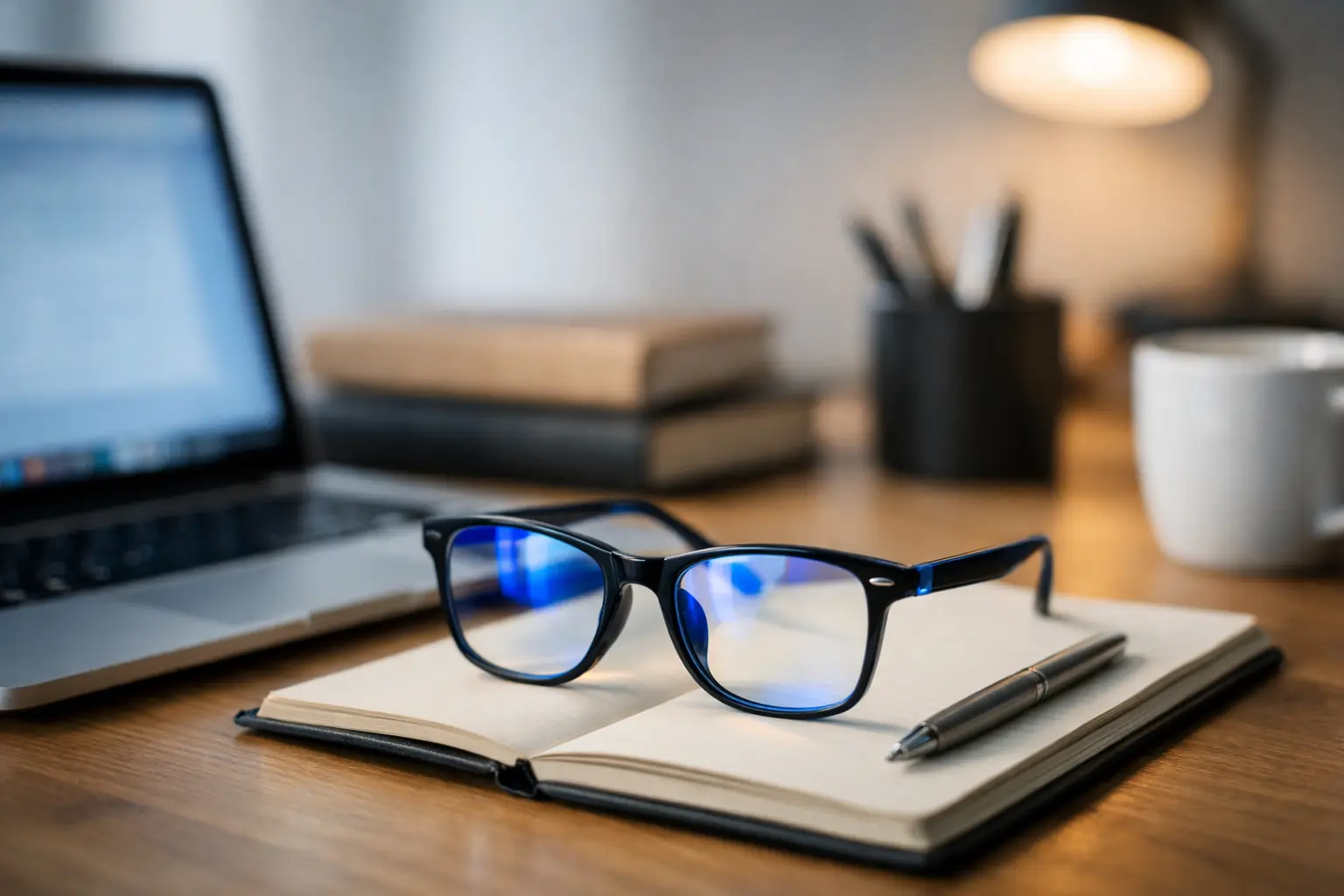
Studying usually doesn’t fail due to lack of motivation. More often, focus gives out – eyes get tired, the screen starts to annoy, the head feels heavy, and in the evening, sleep feels oddly distant. This is exactly where the question ‘what are the best blue light glasses for studying’ becomes truly practical, not just a trend topic. If you spend hours a day in front of a laptop, tablet, or phone, the right choice of glasses affects how long you can concentrate and how good you feel at the end of the day.
Blue light glasses designed for studying are not a one-size-fits-all product. A high school student, university student, an adult preparing for exams, and a remote worker taking online courses in the evening need similar protection, but not necessarily the same strength of filter or the same type of frame. A good choice depends on when you study, how long you look at the screen in a row, and whether you want to wear glasses only in front of the computer or throughout the entire day.
How to Choose the Best Blue Light Glasses for Studying
First, it’s worth honestly evaluating your study habits. If you study mostly during the day, it is usually sensible to choose a model with a more transparent or lightly tinted lens that helps reduce the strain from the screen without significantly changing colors. This works well for those who take notes, attend lectures, read from the screen, and move between class, office, or home during the day.
If most of your studying happens in the evening, the choice of filter level becomes more important. The later the screen time, the more benefit you may get from stronger blue light blocking. The reason is simple – bright light in the evening can keep the brain alert even when the work is long done. If you have trouble falling asleep after studying, it’s worth looking toward solutions with higher protection levels.
The frame is as important as the lens. Glasses that press on the nose, slip down, or become uncomfortable after just half an hour are not suitable for studying. If you wear glasses for 3-6 hours straight, comfort directly influences focus. A lightweight frame, good fit, and sufficiently wide field of view are details often underestimated when buying, but most appreciated in use.
What Distinguishes Good Screen Glasses from Just Stylish Glasses
The market has many models that look good, but from a studying point of view, what the lens actually does is more important. Good screen glasses focus on protection, wearing comfort, and everyday usability. If the lens reduces strain but distorts the image too much, it is not the best solution for studying. If the frame is trendy but tires you while wearing, the glasses end up in the drawer.
It’s worth checking whether the glasses are truly designed for digital device users.UV-400 protection is a strong added value because it helps protect the eyes from other harmful light as well. At the same time, it is important to understand that when studying, you are not just looking for protection on paper, but the feeling that your eyes will be less dry, less strained, and less red in the evening.
A good sign is also if the model is designed for everyday wear, not just short-term use. Studying does not always take place in ideal conditions. Sometimes you read on public transport, sometimes in a café, sometimes in bed before an exam. The glasses must work in different situations and fit your life, not the other way around.
Which filter level is best suited for the learner
There is no one right answer for everyone here. If your studying mainly happens during the day and you want glasses that can be worn for a long time without much adjustment, screen glasses with a moderate filter are usually the safest choice. These are well suited for school work, lectures, homework, and office-type studying.
If you regularly study late into the evening or night, especially during exam periods, stronger filtered glasses may be the smarter choice. They are not always the most neutral image-wise, but their benefits are often more noticeable during evening use. The eyes are less strained and the evening doesn’t drag on as long after studying.
Glasses with a reddish tint and higher protection levelare a category of their own. These are usually not the first choice in the middle of the day in a lecture room or office, but can be effective in very late screen time. They are more suitable for those who know that their biggest problem is not just eye fatigue, but also that they don’t fall asleep after studying.
The best blue light glasses for studying don’t have to be a style compromise
Many avoid buying glasses because they fear they look too technical or bulky. This concern was once justified, but no longer. A good model can be lightweight, effective, and visually clean all at once. If you wear glasses in lectures, library, work, or video calls, appearance matters as much as comfort.
That’s exactly why it’s worth choosing a frame you really want to wear. When glasses suit your face shape and style, you’ll use them more consistently. This is important because blue light glasses are most beneficial when they become a habit, not just a sporadic tool for the worst days.
Black, transparent, and classic-shaped frames are a safe choice among learners because they go well with almost any outfit and situation. If you prefer bolder shapes, that can work too, as long as the frame remains light and balanced. The key for learning is that the glasses should not draw attention due to discomfort while wearing them.
Who benefits the most from screen glasses
The clearest benefit is for those who look at a screen for long periods while studying. This means university students, distance learners, e-course participants, programming students, designers, editors, and anyone whose learning is largely digital. When a day includes both studying and work, total screen time can easily stretch unnoticed to 8-12 hours.
However, you don’t need to realize the benefit only when your eyes already start to sting. Even a learner with moderate screen time might notice it’s easier to focus in the evening with glasses, and by the end of the day they don’t get that familiar feeling of eyes being squeezed empty from the screen. This is especially important during exam periods where endurance counts as much as willpower.
If you already have prescription glasses, it doesn’t mean blue light protection isn’t relevant. In that case, you just need to choose a solution that fits your existing visual correction. For some, a separate pair of screen glasses makes sense; for others a clip-on or special lens solution works. The important part is that the protection fits your usage pattern, not just the description on paper.
What to check before buying
The first question should be simple – how long do you really want to wear them? If the answer is “only in the evenings,” a stronger filter might be a good idea. If the answer is “throughout the entire school or workday,” you should prefer a model that makes it easy to move from one screen to another and doesn’t make the everyday visual experience too heavy.
Secondly, look at the frame size. A frame that’s too narrow presses, and one that’s too wide won’t stay put. If you buy online, don’t ignore measurements – this is one of the main reasons why an otherwise good product doesn’t get used. Thirdly, check whether the product description really talks about the protection level and usage purpose, not just the general blue light topic.
A good choice is also easier when the brand truly specializes in this category. With sininevalgus.ee/, this advantage is clear – the focus is specifically on the needs of screen users, not a random accessory product among a wide selection. For a learner, this means a more precise choice, a quicker decision, and less risk of buying just a nice frame without real practical benefit.
Does more expensive always mean better
Not always, but too cheap a choice can quickly backfire when it comes to studying. If the lens is weak, the frame uncomfortable, or the overall quality variable, you will wear the glasses less. Then it doesn’t matter whether they cost little or a lot – the benefit simply remains unattained.
The advantage of models in a better price range usually comes out in three areas: wearing comfort, lens quality, and general finish. This does not mean that a cheaper model couldn’t work well. However, it does mean that for studying, where usage is regular and long, it is worth looking at the product as an everyday tool rather than a small impulse purchase.
The best purchase is usually the one that fits your schedule. If you study during the day, choose a light and comfortable screen glasses. If you study into the night, prefer stronger protection. If you need both, it might even be reasonable to have two pairs for different uses.
Good studying often starts with simple things – less strain on the eyes, a calmer feeling in the evening, and a better chance to stay focused even when there is a lot of material. If glasses help reduce that load, they’re not just accessories but a smart investment in yourself.