
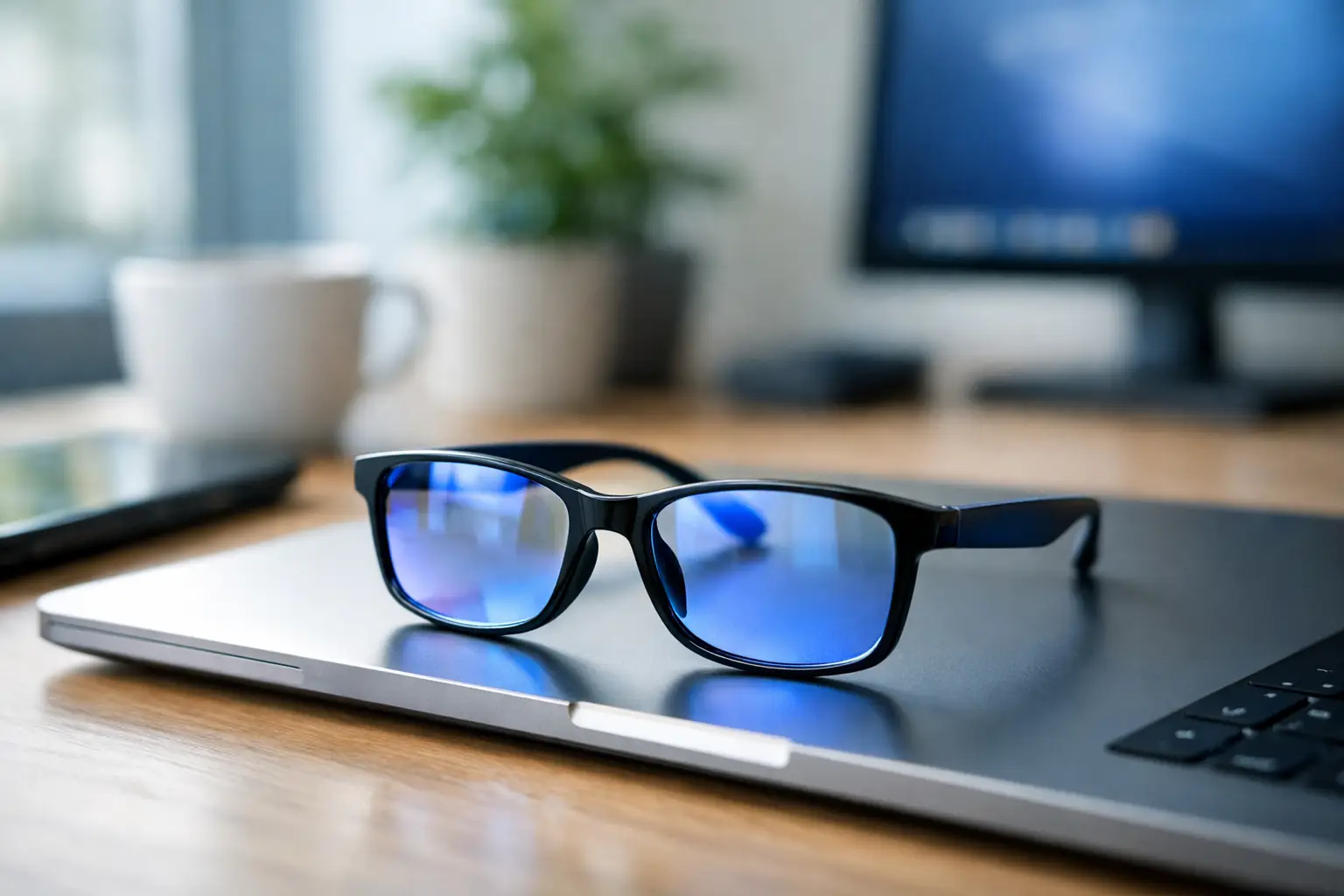
If the day ends with red eyes, a dry feeling, and a strangely alert head, it’s not always just a long workday. A review of blue light glasses becomes truly useful when screens are an integral part of your work, studies, or leisure time and you want to understand whether these glasses help or are just a nice accessory.
The short answer is that properly chosen blue light glasses can be a very good everyday aid. They don’t work miracles overnight and don’t replace sleep, breaks, or good work ergonomics. However, they can reduce screen-induced eye fatigue, make evening screen use more bearable, and help some people switch off better.
Review of Blue Light Glasses – what is really worth evaluating?
The biggest mistake is to look only at advertising slogans. If the glasses have a nice frame and the promise “helps against the screen,” that’s not enough. A good review starts with what you are actually buying.
Firstly, the type of filter is important. All blue light glasses do not work the same way. Some are designed for daytime office work and moderately filter short-wave light to reduce eye strain but keep color perception more or less natural. Others have a stronger filter and are better suited for evening use when the goal is to reduce stimulating light exposure before bedtime.
Secondly, the tint of the lens matters. A completely transparent lens seems most comfortable to many because the appearance stays neutral. At the same time, the filter of such a solution is usually more modest. A slightly yellowish lens generally provides stronger protection but shifts colors slightly warmer. Glasses with a reddish tint or red lens type have clearly higher protection levels and are designed more for specific evening situations, not for every Zoom meeting.
Thirdly, comfort of wear must not be forgotten. If the glasses press on your nose, constantly slip down, or look too unfamiliar to you visually, they will stay in the drawer. Good screen glasses must work with your day, not against it.
Who benefits most from blue light glasses?
The most benefit goes to people who spend several hours a day in front of a computer, phone, or tablet. Office workers, students, designers, assemblers, marketers, programmers, and remote workers are typical users. If the workday starts and ends with a screen, the strain on the eyes is simply high.
They can also be useful for school pupils and students, especially during exam periods when studying stretches into the evening. Also for those who scroll through their phones for a long time at night and notice that sleep doesn’t come as quickly as it could.
However, an honest point here is important. If your headache comes from the wrong glasses strength, dry eyes, poor lighting, or too little blinking, blue light glasses won’t solve the whole problem alone. They work best as part of a broader habit package.
What good can glasses change in everyday life?
For most users, the biggest gain is comfort. By the end of the day, the eyes feel less strained, tingling may decrease, and looking at the screen feels softer. This doesn’t mean the monitor automatically becomes healthy, but the strain can be distributed more tolerably.
Another important topic is the evening. If you use stronger filter glasses after sunset or during late work hours, the brain may receive less stimulating light signals. Many people simply describe it this way – it’s easier to relax in the evening and you don’t have to chase sleep.
The third plus is that today’s models no longer look like a medical compromise. If the frame is modern and well-chosen, you can wear the glasses at work, school, and café without feeling like you had to sacrifice style. This is where the product truly becomes everyday, not just an occasional aid.
When is it worth choosing transparent, yellowish, or reddish lenses?
It depends on when and for what you use the glasses. Transparent or nearly transparent screen glasses are great for daytime work, meetings, and general screen time. They are the simplest choice for someone who wants a discreet solution and doesn’t want the color tones to change significantly.
A lens with a cool tone is sensible when you feel more eye fatigue at the end of the workday and want a bit more from the filter. These are great for long office days, studying, and evening laptop use when you are not doing very precise color-critical work simultaneously.
Glasses with a reddish tone or red lens are a different category. These are no longer universal office accessories but a targeted solution for reducing evening light exposure. If you work late, use your phone before sleep, or want the strongest possible evening protection, this may be the right choice. They usually aren’t suitable for daytime wear because color perception changes too much.
Overview of blue light glasses from the buyer’s perspective
For the buyer, the question is not only whether the glasses “work.” It’s also whether they fit your lifestyle. If you want one pair for the entire day, it makes sense to find a balance between protection, appearance, and comfort. If your main concern is sleep and evening alertness, it’s worth looking at solutions with stronger filters.
It’s also worth looking at materials and finish. Lightweight frames are a big advantage for long wear. Flexible temples, good fit, and more scratch-resistant lenses provide more real-life value than overly aggressive sales text. When glasses are worn every day, small details matter a lot.
For the Estonian buyer, availability is also important availability. When delivery is fast and the model selection is clear, deciding is easier. Even better if the selection includes both discreet and trendier frames, because blue light glasses are no longer just a technical purchase but part of your everyday style.
Common misconceptions that make the choice difficult
One of the most common myths is that the stronger the filter, the better in every situation. In reality, this is not the case. If you do color-sensitive work during the day or don’t want the image to become too warm, a too strong filter can be disturbing. The right filter is the one that suits your usage time.
Another misconception is that glasses solve all screen-related complaints. If you sit for ten hours straight in a dry office, look at the monitor without breaks, and keep your phone in front of your face even in bed, glasses alone won’t be enough. The results are usually best when you add screen breaks, proper lighting, and a small digital curfew in the evening.
The third myth is that proper blue light glasses always have to be conspicuously yellow. Nowadays, there are also visually clearer solutions, but their protection level may be different. Therefore, you should not judge the product solely by its appearance.
How to choose the right pair for yourself?
Start with an honest question – when do you need them most? If the answer is during the workday, choose a lighter filter and a comfortable frame that is easy to wear for several hours in a row. If the answer is in the evening, focus on a stronger filter and accept that the lens may be tinted.
Also consider the nature of your work. If you deal with design, photo, or video, color perception is important and a very tinted lens may distract you. If you mainly do text, spreadsheet, or communication work, there is more leeway with the filter.
For the frame, prefer a model that you actually want to wear. This sounds simple, but many purchases stall right here. If the glasses fit your face shape and look good, you will use them consistently. And consistency is what brings benefit.
sininevalgus.ee/the advantage of a specialized selection like this is that you can choose between different levels of protection, styles, and price ranges without having to make blind compromises. When a product is created according to the real needs of a screen user, the result is usually better as well.
Are blue light glasses worth buying?
If your day is spent among screens, then most likely yes. Not because they are a fashion craze or a miracle tool, but because many people quickly notice the difference. Less eye strain, a calmer evening, and better wearing comfort during the workday are more than enough reasons to seriously consider this solution.
At the same time, it’s worth making the purchase consciously. Don’t just choose the first couple that come your way. Check the filter, think about your usage time, and choose a frame that suits your face and style. A good pair of glasses doesn’t have to be just protection – it can be part of your everyday well-being.
If you spend most of the day in front of a screen, the question is no longer whether your eyes get strained, but how well you support them. The right glasses won’t do the work for you, but they can make a long day noticeably easier.