
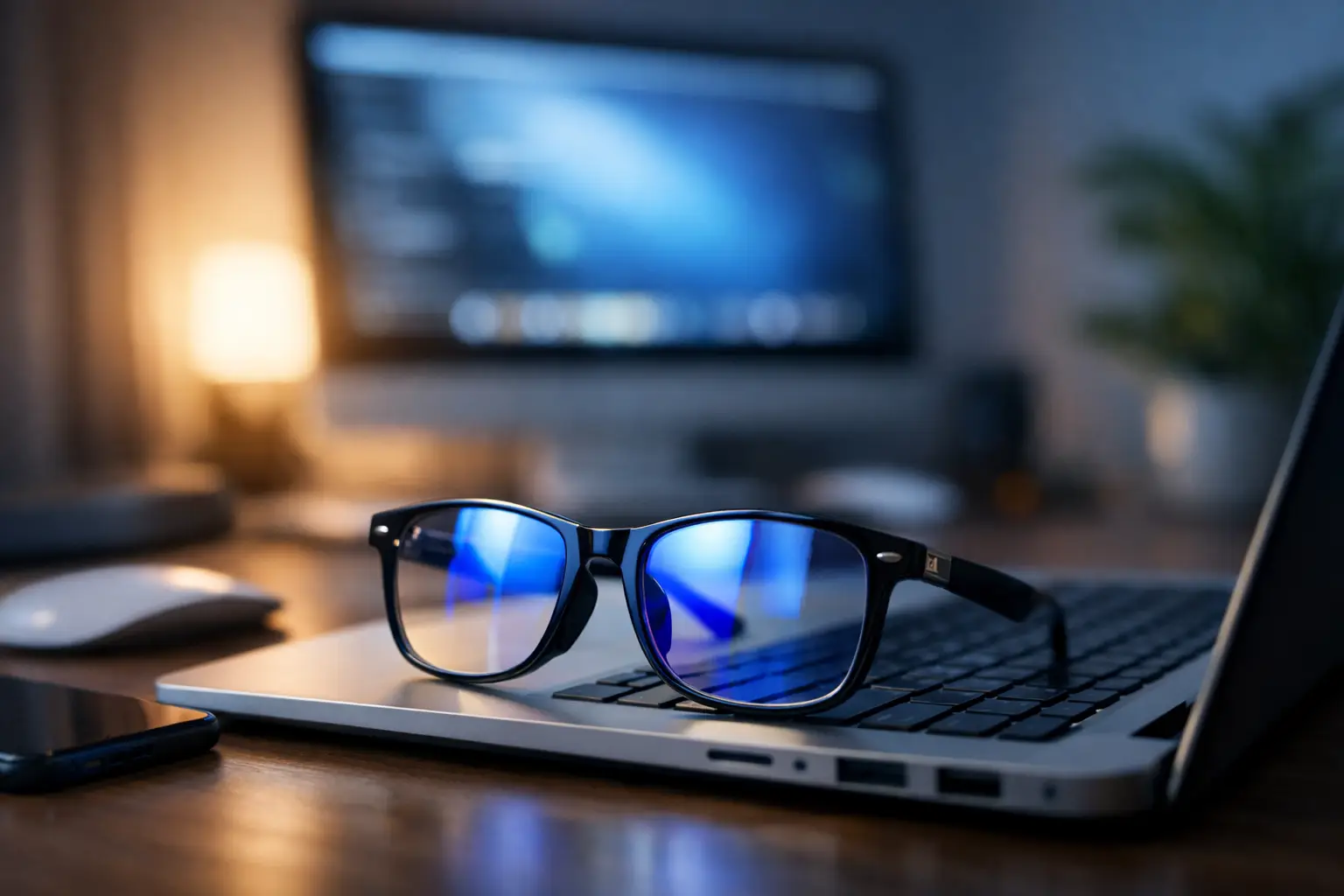
When the day ends with heavy eyes, dry feeling, and a strange evening alertness, a completely justified question arises – do blue light glasses work? The short answer is yes, they really work for many people. But not magically and not for all problems at once. Their effectiveness depends on how long you look at the screen, at what time of day you do it, and what type of lenses you use.
There are many promises around blue light glasses. Some of them are quite realistic, some sound better than they actually perform in real life. If the goal is less eye fatigue, more comfortable screen work, and a calmer feeling in the evening, then these glasses are often a very sensible choice. If you hope the glasses will solve poor sleep routines, bad posture, and a 12-hour screen day all at once, it’s not that simple.
Do blue light glasses work in everyday use?
For most people, the most noticeable effect is related to screen viewing comfort. If you spend a lot of time in front of a computer, phone, or tablet, your eyes are constantly under heavy strain. It’s not just about blue light, but also that you blink less, focus stays on the same distance for a long time, and screens are often too bright.
This is where screen glasses come into play. These can help reduce the sharpness of the screen and the uncomfortable “cold” light sensation that builds up in your eyes by the end of the day. Many wearers simply describe it as – their eyes are less fatigued in the evening, less tingling, and concentration remains pleasant longer. This doesn’t mean the screen becomes harmless. It means the strain becomes more tolerable.
The effect of glasses is especially noticeable in people who work in offices, study late into the night, or use their phone right before going to bed. When screen time is short, the difference may be smaller. If the screen is your tool from morning to evening, you’re much more likely to notice a difference.
What do blue light glasses actually do?
Simply put, these filter part of the shortwave blue light emitted by screens and LED lighting. Depending on the lens, the filter can be milder or stronger. More transparent screen glasses intended for daytime use are usually designed to fit into the workday without altering color perception too much. Stronger protective lenses, including those with a reddish tint red lens glasses, are intended more for evening use, when the goal is to reduce brightness before sleep.
This difference is important. If a person tries glasses with a very light filter and expects sleep to become perfect overnight, they may be disappointed. Likewise, it is not sensible to do color-sensitive work all day with very strong tinted lenses. The right result depends on correct usage.
Glasses do not cure eye diseases nor replace an eye exam. If you have persistent headaches, severe dry eyes, or blurry vision, it’s worth checking the cause. At the same time, this does not make blue light glasses pointless. They are a practical aid to reduce specific strain, not a universal medical solution.
When is the effect most noticeable?
Usually, those who benefit most have one or more very familiar symptoms. Eyes become red during the day. In the evening, a dry or burning sensation develops. After a long workday, it is hard to detach from the screen, but at the same time, the feeling is oddly tired and alert simultaneously.
It is in such situations that blue light glasses can quickly make a noticeable difference. For some, the effect is noticeable in the first few days; for others, over a couple of weeks. Wearing the glasses consistently during the workday or evening screen hours makes it easier to understand whether the eyes tire less and if the evening rhythm becomes calmer.
Here a fair rule applies – if your concern mainly comes from heavy screen load, the chance of feeling the benefit is high. If the problem is rather due to lack of sleep, stress, or an incorrect glasses prescription, the effect of blue light glasses will be smaller.
Do blue light glasses also help improve sleep?
Yes, but only if you use them at the right time and with the right expectation. Evening blue light can support alertness, which is beneficial during the day but not so much late at night. If you look at a screen for a long time before sleep, the brain may receive a signal that the day is not over yet. Glasses with stronger filters help reduce this effect.
At the same time, it should be said directly – if you drink energy drinks in the evening, work with a laptop in bed, and go to sleep at different times, glasses alone are not enough. They support a better sleep routine but do not replace it. The best result comes when you use glasses together with simple habits like lowering screen brightness and having a calmer last hour of the evening.
That is why many prefer a dual solution. Use screen glasses with a lighter filter for work during the day, and lenses with a higher protection level in the evening, if the goal is to help the body calm down. This is a practical, not overly complicated approach.
Why do some people say they don’t work?
Usually, the reason is one of three things. First, the wrong type of glasses was chosen. If the need is to reduce evening alertness but the filter is very light, the result may not be sufficient. Second, glasses are not worn consistently. If they are on the table, not on your face, there is no effect. Third, too much is expected from them.
Quality differences matter too. Not all glasses on the market filter light at the same level or offer the same wearing comfort. If the frame is uncomfortable, the lens distorts the image, or it’s not clear what the product is intended for, the experience will be mediocre. In daily use, it is very important that the glasses are lightweight, look normal, and fit your routine. If they look good, you are much more likely to actually wear them every day.
How to choose glasses that suit you?
Start with your day, not the trend. If you work 8-10 hours in front of a screen, it makes sense to choose daily screen glasses, which help reduce strain without too much tint. If the biggest problem is evening phone use and difficulty falling asleep, it’s worth looking at solutions with stronger protection.
The next question is comfort. The frame must fit your face and feel comfortable to wear. Glasses that press on the nose or constantly slip down quickly end up in the drawer. Style is just as important. People no longer want to choose between function or appearance. A good pair does both.
If you want a sure bet, it’s worth preferring a specialized seller who focuses specifically on that product category. This makes it easier to understand which model is intended for daytime work, which for evening use, and what to expect from a particular lens. In Estonia, this is especially convenient because selection, fast delivery, and local availability give the purchase more confidence than a random anonymous solution.
Who is the most reasonable buyer for blue light glasses?
They are a particularly good choice for office workers, students, designers, assemblers, gamers, and remote workers – that is, people whose day really revolves around the screen. If you know your eyes are tired by evening almost every day, this is not a niche product. It is a quite logical work tool.
A good example is a person who wakes up with their phone, works on a laptop, replies to messages on the go, and ends the day with a TV series. With such a rhythm, the question is not whether the screen affects well-being. The question is how to manage that impact more wisely. Blue light glasses are one of the simplest steps because they don’t require a big life change. You put them on and continue your day.
The strength of a specialized selection like sininevalgus.ee/ is that the glasses are not just an aid. They are part of everyday wearing – practical, good looking, and comfortable enough to really become a habit.
So, do blue light glasses work?
They do work, if used in the right situation and with realistic expectations. They don’t make screen life disappear but can make it significantly more comfortable. Less eye strain, less evening alertness, and better wearing comfort throughout the day are completely realistic reasons why so many people stick with them.
If you spend most of your day in front of screens, you don’t have to wait until your eyes start protesting. Often, a well-chosen pair is enough to make the workday feel softer and the evening calmer.