
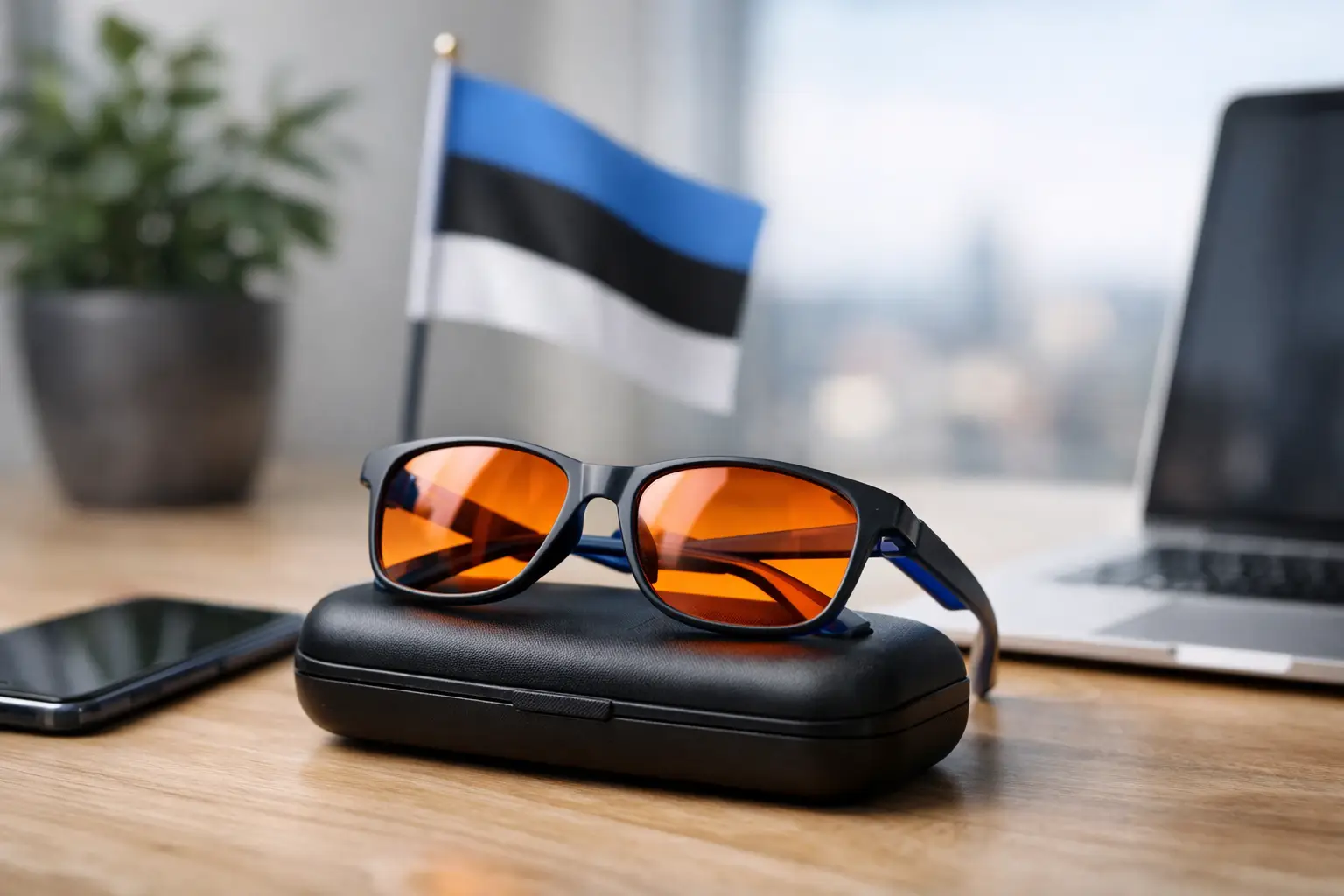
When the day ends with dry eyes, irritation, or a strange restlessness in your head, the problem is not always the work itself – often the issue is how long screens hold your attention. Buying blue light glasses from Estonia has become a very practical choice for those who spend a large part of the day on the computer, phone, or tablet and just want to feel better by the evening.
This is no longer a niche product for a few tech enthusiasts. Screen glasses have moved into everyday use both in the office, home office, school, and creative work environments. The reason is simple – when eyes are under strain all day, well-chosen glasses can help reduce fatigue, glare, and the feeling of overload in the evening. And when the glasses look good, they are actually easy to wear.
Why buying blue light glasses from Estonia is worth it
There is one very clear advantage to buying in Estonia – you get your product faster, choose more easily, and usually understand better who you are buying from. If the product is meant for everyday use, no one wants to wait weeks or get stuck if the model doesn’t fit or the description was too vague.
When buying locally, trust also matters. Estonian consumers often prefer a seller whose product description is clear, delivery is fast, and selection is genuinely created for the local buyer, not just a generic part of a large international catalog. If there is also a physical presence or resellers, the decision becomes even easier – the product feels tangible, not anonymous.
This is especially important for blue light glasses, because the purchase is not based only on appearance. Filter type, lens tint, frame shape, comfort, and usage situation all matter. A specialized local seller can provide a much more confident choice here than a general marketplace.
What to look at before buying
Not all blue light glasses serve the same purpose. This is where many buyers make their first mistake – choosing only based on design or assuming every lens does exactly the same thing. In reality, the right model depends on when and how long you use the glasses.
If you use screens during the day for work or study, it usually makes sense to choose screen glasses with a lighter filter. They are designed for long-term wear, help reduce eye strain, and are well suited for office or learning environments. If the main concern is evening alertness, screen-induced restlessness, or difficulty falling asleep, it is worth looking at solutions with a higher protection level, including those with a redder tint red lens glasses.
It is also important whether the glasses have, in addition to UV-400 protection, anti-reflective coating or other lens finishes. These details greatly affect wearing comfort. It becomes noticeable if you work in bright rooms or move through multiple lighting environments during the day.
How to choose the right glasses for your use
The easiest way to choose is to start with your day, not the product. If you spend 8-10 hours in front of the computer and feel eye strain or headaches in the evening, you mainly need a model suitable for long workdays. In this case, a lightweight frame, comfortable fit, and lenses that do not make the screen image uncomfortably yellow are important.
If your biggest problem is that you go to bed but your body can’t relax, then a stronger filter variant for evening use might be suitable. Here, one compromise must be considered – the stronger the filter, the more color perception changes. This is not a flaw, but part of the solution. The question is simply what you need the glasses for.
If you wear glasses both for work and leisure, it’s worth considering the appearance as well. The good news is that today’s selection no longer forces you to wear technical-looking frames that only suit the home office. Modern models work just as well with casual clothes, office style, or minimalist urban looks. This matters more than it initially seems because an uncomfortable or stylistically unsuitable product is used less often.
Buying blue light glasses from Estonia – mistakes to avoid
The first mistake is believing that the cheapest option is essentially the same as a specialized product. Glasses may look similar in pictures, but the wearing experience and the actual effect of the filters often differ significantly. If the product description does not clearly state what the glasses are intended for, what the level of protection is, or how to use them, it’s best to be cautious.
The second mistake is setting the wrong expectations. Blue light glasses won’t make your day shorter or reduce screen strain to zero. However, they can help reduce some symptoms caused by long screen time—especially if used consistently and in the right situation. If you work 12 hours straight without breaks, no product will solve everything. But a good pair of glasses can make that load much more bearable.
The third mistake is underestimating the fit. If the frame presses on the nose, constantly slides down, or feels too wide, the glasses will just end up in a drawer. When choosing from an online store, it’s helpful if the model information is clear and the selection wide enough to find a frame shape that suits both narrower and wider faces.
Why choosing a local specialist is often better
If an online store deals with many different products, the blue light glasses category tends to be just an extra line in the menu. The situation is different with a specialized seller. Then the entire selection, descriptions, and recommendations are built so that the customer finds a solution suitable for their specific use.
This also gives an advantage in the choice of models. There are more neutral frames for those who want a modest everyday pair, and bolder options for those for whom glasses are part of their style. Add quick delivery in Estonia and the option to buy from a well-known local provider, and the purchase becomes much more reliable.
sininevalgus.ee/ is a good example in this respect of a brand that doesn’t just sell glasses but a specific solution for people with screen strain. This difference is important because the buyer is not just looking for an accessory—they want to feel better at the end of the day.
Does more expensive always mean better?
Not always, but a price that is too low should make you ask where the savings have been made. Is the frame comfortable? Is the filter level even clearly described? Do the lenses have an additional coating that improves the user experience? These questions determine quite a lot.
A good purchase is not necessarily the most expensive model, but the one that suits your use. A student who works on a laptop all day may need a different solution than a video editor who follows colors very precisely, or a person who wants a stronger filter just for evening use. So the price alone doesn’t say much. What matters is what you get for it.
How to understand that the choice is right
With the right pair, you don’t get the feeling that you need to force yourself. The glasses fit comfortably, look good and quickly become part of your day. The effect may not always be dramatic in the first hour, but often you notice the difference over the course of a week – your eyes are less tired by the evening, looking at the screen feels softer, and the end of the workday doesn’t hit as hard.
If your main goal is better evening calm, then watch how you feel after later screen use. For some people, the difference is very noticeable, for others more modest. It depends on sensitivity, habits, and how consistently you use the glasses. But this is where choosing the right product comes into play, not trying a random pair.
When is it worth making the purchase
The honest answer is – when you already feel symptoms or know that screen time won’t decrease anytime soon. There is no point in waiting until eye fatigue or evening tension becomes an everyday norm. If your work, studies, or lifestyle happens mostly in front of a screen, a proactive purchase is completely reasonable.
A good moment is also when you want to combine practical need and style. Today’s blue light glasses don’t look like a medical aid. They can be as natural a part of your daily look as a watch, headphones, or a good pair of sunglasses.
In the end, it’s simple – if screens are a permanent part of your day, it’s worth choosing glasses that really work according to your rhythm, not just look good in product photos. That’s when the purchase becomes a good decision, not just another thing on the desk.