
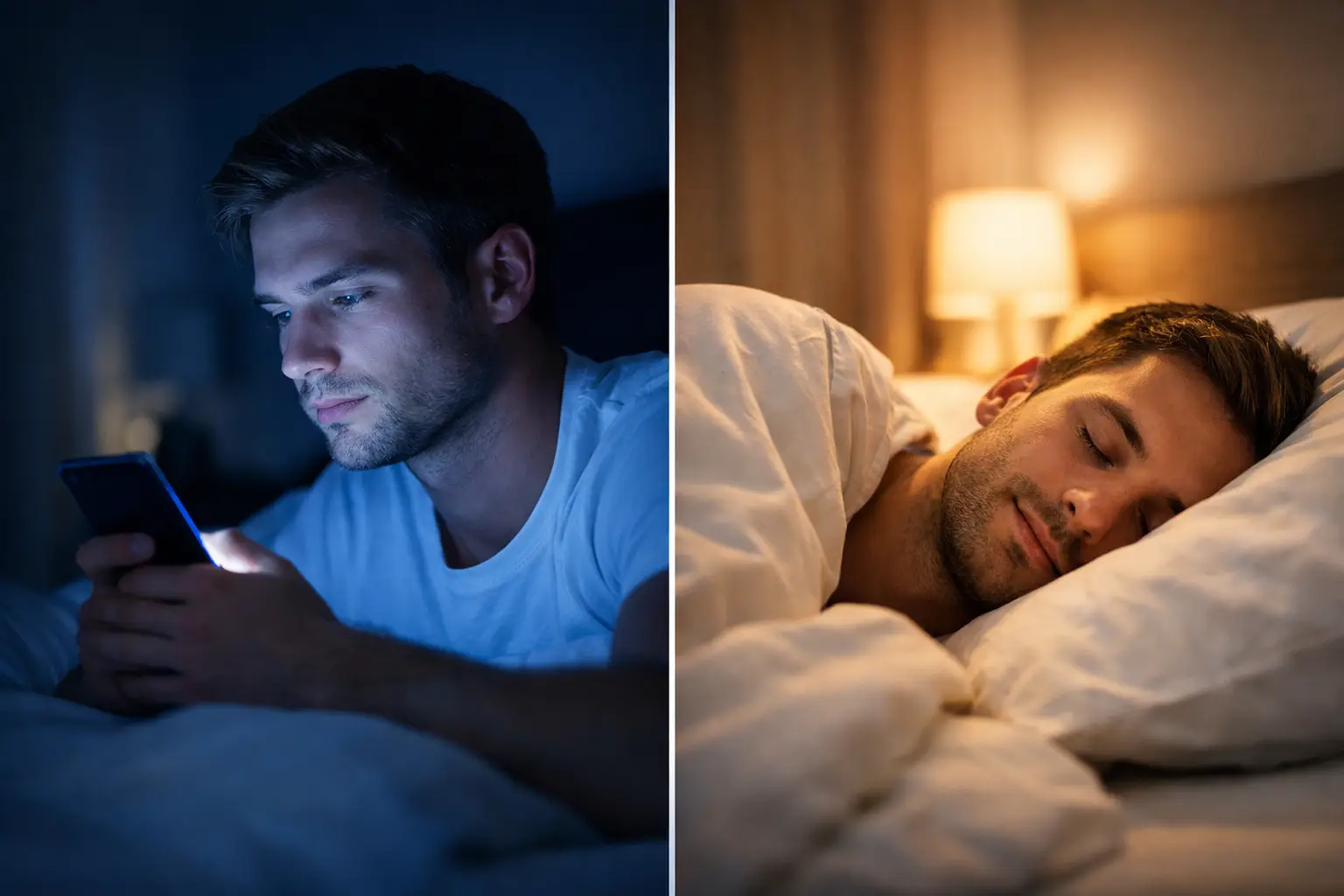
Evening stretches unnoticed long when the phone is still in hand, the laptop is on the lap, and the eyes feel tired, but sleep does not come. The question of whether blue light affects sleep is not just an internet health trend, but a very practical matter for everyone who ends their workday in front of a screen and goes straight to bed from there.
Many people recognize this pattern. Screens all day, one more series in the evening, a few messages, a bit of scrolling – and even though the body is tired, the mind is still awake. This is where blue light comes into play. Not the sole culprit, but quite an important factor.
Does blue light affect sleep or is it exaggerated?
The short answer is yes, it does affect. The longer answer is that the effect depends on timing, amount, and how sensitive you are to evening light. Not everyone reacts exactly the same way, but the overall picture is clear – strong evening light, especially light in the blue spectrum, can shift the body’s natural sleep rhythm.
Our body uses light to regulate its internal clock. When you receive a bright light signal in the morning, it’s a signal to the body that the day has started. In the evening, the body expects the opposite – less light, softer tones, relaxation. If at that time the eyes receive a lot of blue light from the phone, computer, or bright LED lighting, the brain can get a confusing signal as if the day is continuing.
The result does not always mean complete sleeplessness. Often the effect is more subtle. Sleep comes later, falling asleep takes longer, or in the morning there is a feeling that the night did not truly restore. This gray area is the reason many underestimate the problem.
How blue light affects sleep
Most often melatonin is talked about. It is a hormone that helps the body prepare for sleep. With the onset of evening twilight, its production usually increases. However, if the eyes receive bright and bluish light at the same time, melatonin production can be delayed.
Practically this means the body does not switch to nighttime mode at the right time. You may feel tired, but the body is not fully ready for sleep. The result is the familiar condition where you toss and turn in bed, thoughts race, and it is hard to really calm down.
It is also important that the problem is not limited to just the phone screen. Tablets, monitors, TVs, and strong cold-toned lamps all together provide a significant evening light load. If you work late into the night or study for exams in front of a screen, the effect can be even stronger.
Why do some people feel the effect more than others?
Individuality comes into play here. If you are naturally more sensitive, have lighter sleep, or already find it difficult to switch off in the evening, blue light may affect you more. Age, daily rhythm, and how close the screen is to your face also matter.
Younger people often receive a stronger light stimulus because the eye lets in more light. However, this does not mean that adults over 30 or 40 years old are protected from the effect. If screen time is long and the evening active, the body usually signals this.
Is the problem only the light?
The honest answer is no. Evening screen time affects sleep on several levels. Blue light is one part, but just as important can be what you are doing on the screen. Work emails, social media, games, news, and constant notifications keep the nervous system alert. So even if you reduce the light effect, the content itself may still disturb sleep.
That is why it is not worth looking at the blue light issue in too black-and-white terms. If you end your day amid intense work, emotional content, and strong light, it is difficult for the body to make a sharp turn into sleep. A good solution is usually the combined effect of several small steps, not one miracle trick.
When does blue light disturb sleep the most?
The most important time is usually 2-3 hours before going to bed. That is when the light load should start to decrease. If during that window you look at a bright phone in a dark room or work in front of a monitor at full brightness, you are most likely to feel the effect.
The closer the screen is to the eyes, the more direct the effect. That is why the phone tends to be especially sneaky. It is held closer to the face than a TV or desktop computer and is often used in complete darkness. Such a combination is not very friendly in terms of sleep.
Is night mode enough?
Screen night modes or warmer color temperatures are better than nothing. They reduce some of the bluish tint and can make evening usage gentler on the eyes. However, this may not always be enough, especially if screen time is long, brightness is high, or you use multiple devices consecutively.
Many people think that if the screen looks yellower, the issue is solved. In reality, light exposure remains even when the tone becomes slightly warmer. Additionally, night mode does not reduce notifications, stress, or the habit of endless scrolling before sleep.
What to do if evening screen time cannot be avoided?
This is the most realistic question. Not everyone can close their computer at eight o’clock. Some work in shifts, some study in the evenings, some communicate with clients later. If the screen cannot be avoided, it just needs to be used smarter.
Start with brightness. If the screen shines like a spotlight in the evening, the effect is stronger. Reduce brightness as much as comfortably possible. Use warmer lighting in the room in the evening, not just on the device. Keep your phone further away from your face, if possible, and set a clear boundary for when work or entertainment truly ends.
A very practical solution is blue light glasses. These are especially a sensible choice for people who spend a lot of time in front of the computer, work in the evenings, or regularly experience eye fatigue along with difficulty falling asleep. The purpose of good screen glasses is not only comfort during the day but also to reduce evening light exposure.
If the goal is stronger protection during late evening hours, higher filtration level solutions like red lens glasses, more targeted. These are not necessary for everyone’s daily office use, but for a person who works long after sunset or wants stricter evening light control to support sleep, they can be a very effective choice.
sininevalgus.ee/ the focus is on making sure the solution is neither bulky nor uncomfortable. If the glasses look good and fit everyday style, they will actually be used regularly – and it is consistency that delivers results.
How to tell if evening light is disturbing your sleep?
The signs are not always dramatic. You don’t have to be awake until three o’clock for the problem to be real. Often it is enough to notice recurring patterns. Falling asleep takes longer, even though you are tired. It is hard to wake up in the morning. In the evenings, your eyes get dry or itchy. After a long time in front of the screen, the body is tired but the mind is too alert.
If at the weekend, when screen time is less and the evening is calmer, sleep comes more easily, this is a pretty strong hint. The same applies if you notice a difference after you reduce evening phone use or consistently wear protective glasses for a couple of weeks.
What gives the best result?
Usually not one big change, but several small ones. If you limit pointless scrolling in the last hour, use softer home lighting, reduce screen brightness, and add blue light filtering glasses, the effect is often noticeable. For some people, falling asleep improves quickly; for others, the evening feeling changes first – eyes are less strained and the body calms down more naturally.
It is worth remembering that sleep quality does not depend only on blue light. Caffeine, stress, bedroom temperature, fluctuations in sleep rhythm, and late exercise also matter. But if screens are an integral part of your daily life, reducing light exposure is one of the easiest places to start.
Good sleep is not always born from great effort. Sometimes it is enough to end the evening a little smarter than before – less bright light, less eye strain, and more room for real rest.