
Scrolling on your phone at 10 PM seems innocent – until sleep doesn’t come, your eyes feel strained, and your brain keeps working as if it were noon. This is where the topic of red lens glasses vs regular glasses really becomes important, because not all glasses do the same job or suit the same time.
If you use screens from morning till night, choosing the wrong glasses usually means one of two things: either the protection is too little, or you wear too strong a filter at times when it is not actually needed. In both cases, the benefit is less than it could be. A good choice starts with understanding how these two solutions differ.
Red lens glasses vs regular glasses – what really sets them apart?
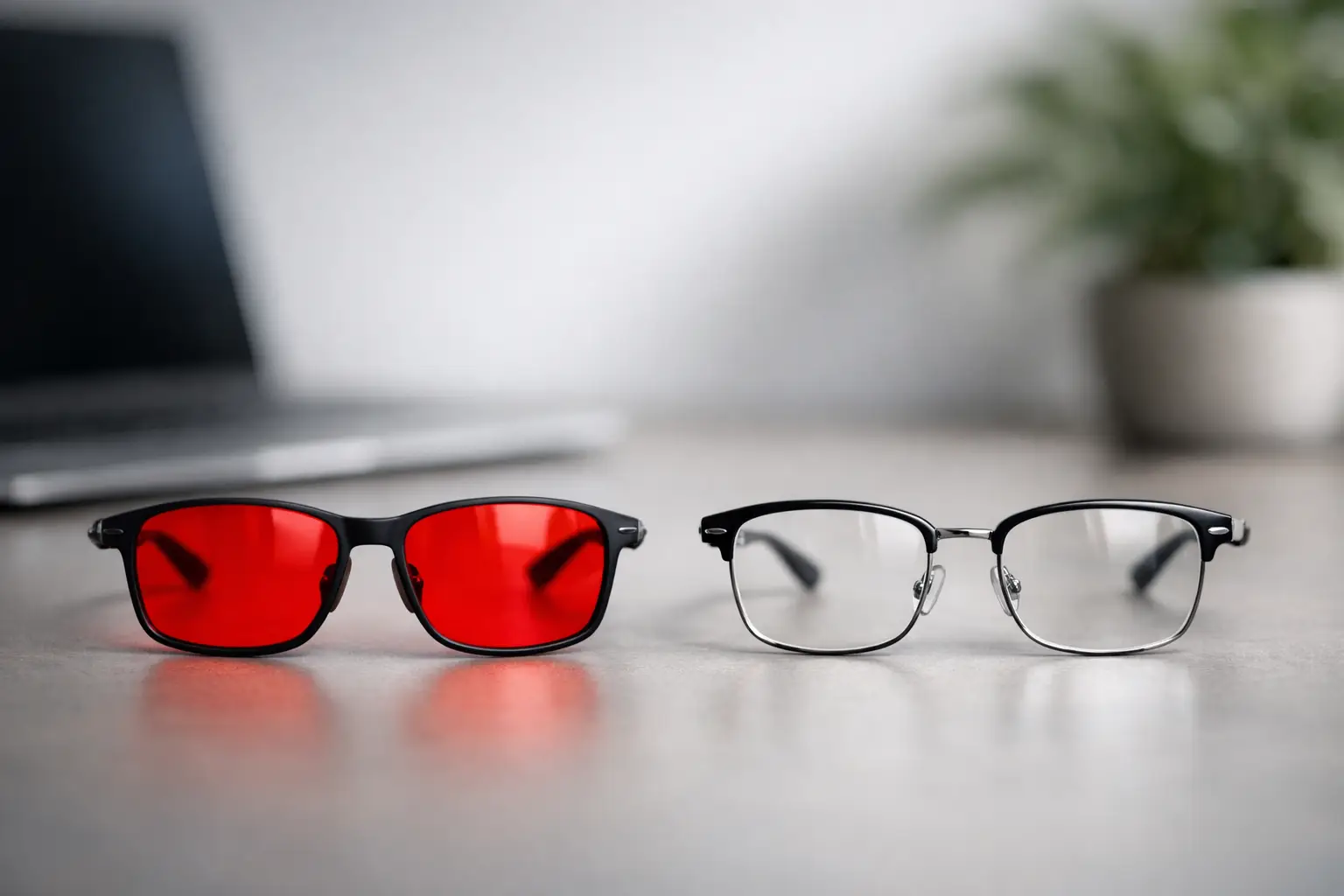
Simply put, regular blue light glasses filter part of the blue light coming from screens to reduce eye strain, tension, and evening discomfort. They are designed for everyday wear during the workday, studying, or extended screen time. The lens is usually clearer or slightly tinted so that color perception remains quite natural and the glasses are comfortable to wear in the office or meetings.
Red lens glasses are a stronger level solution. The red lens blocks a much larger portion of blue light and often also part of the green light spectrum, which particularly affects evening alertness and melatonin production. In practice, this means they are not just “slightly stronger” screen glasses but a product with a different purpose. They are primarily used in the evening when you want to reduce the light’s impact on the sleep cycle.
While regular glasses help you feel more comfortable in front of the screen, red lens glasses are more aimed at signaling the body to end the day. The difference is noticeable especially for people who work late, scroll in bed, or feel that their sleep is shallow after screen time.
When are regular glasses the right choice?
Regular blue light glasses are best suited for daytime use. If you work on a computer, study online, edit videos, play games, or reply to messages throughout the day, the goal is to reduce eye fatigue and make screen time more bearable. In such a situation, most people do not want a very strong color change or dark filter.
This is also logical during the day. The body needs daylight and alertness signals, and too strong a block is not always practical. In the office, school, or studio, you want to see colors normally, move freely, and wear glasses that suit the rest of your day.Regular screen glasses provide the most balanced solution here.
They are also a good choice if your main concern is dry eyes, tingling, or headaches after long screen time. Not all problems are related to sleep. For many, it is daytime visual comfort that is the reason they buy glasses at all.
When are red lens glasses a better choice?
Red lens glasses come into play when evening screen time is long and has become your biggest sleep disruptor. If you work shifts, end the day on your laptop, watch series late, or use your phone just before bedtime, regular glasses might not be enough.
The idea of red lenses is not to make the screen a “more comfortable” version. The purpose is to reduce the light that keeps the brain awake when the body could already be calming down. This is why many use red lens glasses 1-3 hours before sleep. They are especially suitable for people who feel tired in the evening but whose mind remains active when going to bed.
Here, however, one honest nuance is important. Red lens glasses are usually not the best choice in the middle of the workday or in situations where you need accurate color perception. The red tint noticeably changes the image and is not suitable for everyone for daytime use. If you work in design, photography, or video, this difference is especially important.
Do red lens glasses protect better than regular ones?
If the question is only about which blocks more blue light, then the answer is simple: red lens glasses. A stronger filter usually means stronger blocking. But better doesn’t automatically mean you should wear them all the time.
The right question is not just “which is stronger,” but “what do I need them for.” If your goal is to support your eyes throughout the day in front of screens, then regular glasses may be a smarter choice because they are easier to wear continuously. If your goal is to reduce evening light exposure and support sleep, red lens glasses are often a more effective solution.
Many people hope to find one pair of glasses for everything. Sometimes that works, but not always. If screen time is very high both during the day and evening, the most sensible solution may be to use glasses with different strengths at different times.
Red lens glasses vs regular in terms of sleep quality
Here the difference becomes clearest. Regular blue light glasses can help in the evening, especially if you wear them consistently and your screen time isn’t very intense. They reduce strain and can make the evening calmer.
If you are sensitive to light or your sleep rhythm is already disrupted, red lens glasses usually give a more noticeable result. Stronger blocking means the evening light doesn’t push your body so strongly toward wakefulness. This doesn’t replace good sleep habits but can offer a very practical advantage for people who simply can’t turn off screens in the evening.
That’s why many people seek not just stylish glasses but a solution that truly fits their lifestyle. If evening work or study is unavoidable, choosing glasses according to when you wear them makes sense.
Which is more comfortable in everyday life?
Comfort depends more on usage time than on which option is “better.” Regular glasses are generally more versatile. They make it easier to switch between screen and other environments, participate in video calls, work in the office, and maintain a natural appearance. For many, they are the first and simplest step.
Red lens glasses are more purposeful. They do not try to be unnoticed. Their strength lies in a very specific use case – in the evening at home, after work, before sleep. If your goal is evening recovery, this compromise often pays off. If you are looking for glasses to wear at 10 AM in a meeting and at 11 PM in bed, you might feel that one solution remains somewhat incomplete.
How to choose the right option for yourself?
Start with an honest question: what is your biggest problem? If your eyes are tired by the end of the day, but your sleep is otherwise fine, start with regular blue light glasses. These suit the everyday routine of most people most naturally.
If you feel that evening screen time specifically disrupts your sleep, makes your mind too alert, or delays falling asleep, consider red lens glasses. They are meant for stronger evening protection, not just a style element.
If both problems exist, it’s worth considering two pairs. This is not an exaggeration but a practical choice. One solution for the day, another for the evening. The logic behind the selection on sininevalgus.ee is simple – glasses don’t only have to be beautiful, but they must suit how you really live your day.
Common misconception: more filtering is always better
This sounds tempting, but it doesn’t actually work like that. A stronger filter is better only if the use case requires it. Otherwise, the result might just be uncomfortable color perception, an unusual view, and glasses that end up in the drawer.
A good pair of glasses is one that you actually wear. If regular glasses are comfortable during your workday and help reduce eye strain, they are more useful than a too strong solution that you rarely use. The same goes the other way around – if the problem is evening overfatigue and poor sleep, a filter that’s too mild might simply be too weak.
The best choice is not the one that sounds the strongest. The best choice is the one that fits your schedule, screen time, and goal. Once you pinpoint this exactly, the difference between red lens glasses and regular ones becomes much easier.
If screens are a natural part of your work, study, and free time, choose glasses not only based on appearance but based on when you need them most. The right filter at the right time delivers a result you feel not only in your eyes but also in your evening wellbeing.