
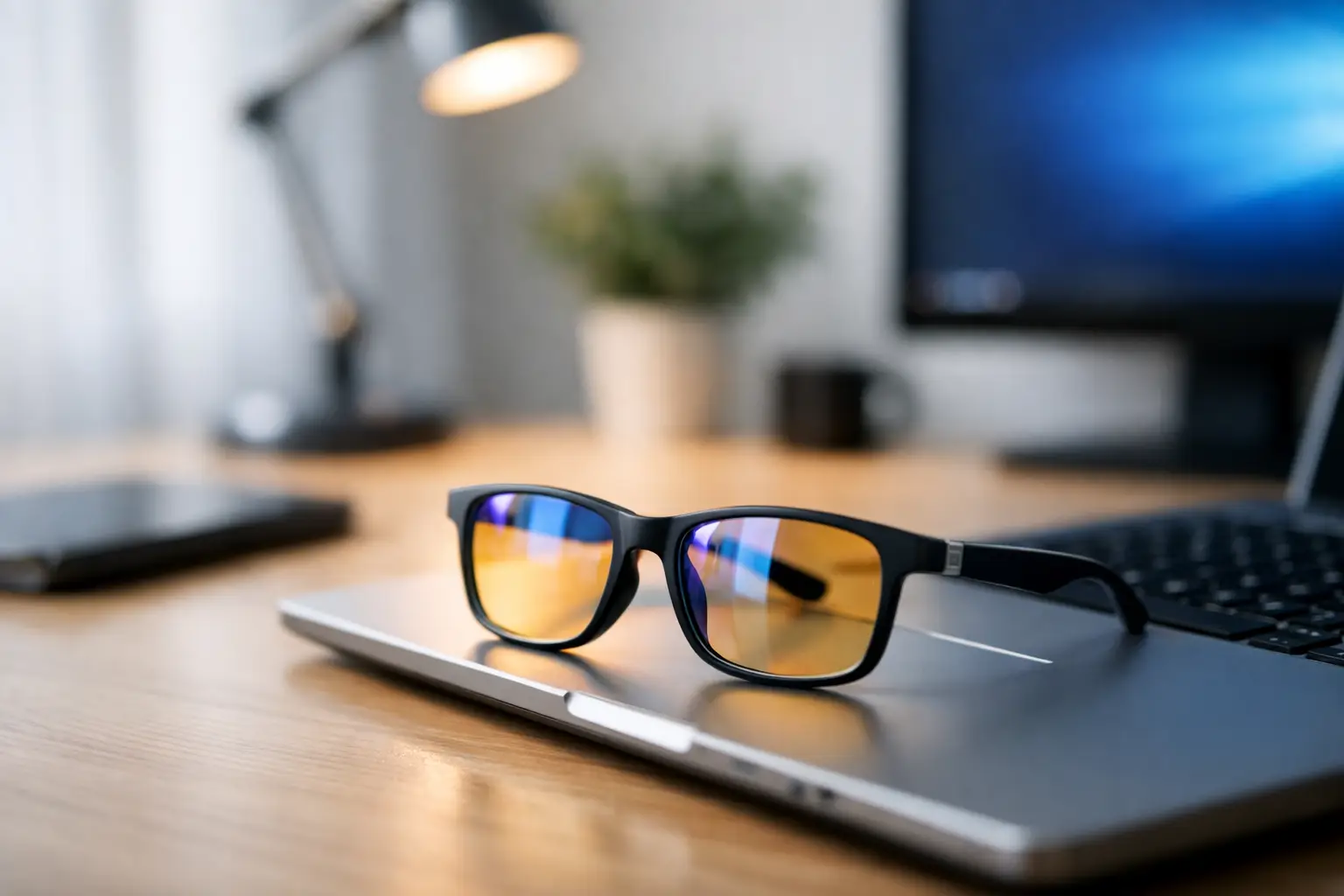
By the end of the day, your eyes honestly show how your screen time has been. If your gaze is tired in the evening, your eyes dry, or you can’t fall asleep at the right time, a very practical question arises – how to choose blue light glasses so that they are truly beneficial, not just look good.
The right choice does not start with which frame looks best in the picture. It starts with your habits. Do you work 8 hours behind the computer? Do you scroll your phone late into the night? Do you need glasses only for the office or also for evening use at home? Blue light glasses are not the same product for everyone. Their effectiveness depends on how well the level of protection, lens, and wearing comfort fit your day.
How to choose blue light glasses according to your usage
If you use screens mainly during the workday, it’s worth looking at models designed for everyday wear and moderate blue light filtering. These help reduce eye strain, tingling, and fatigue without making the screen image uncomfortably yellow. This choice is well suited for office workers, students, designers, or anyone who spends a large part of the day in front of a monitor.
If your biggest concern is evening alertness and poorer sleep, then just a weak filter may not be enough. In such a case, it’s worth looking at lenses with a higher protection level or red lens solutions, which are specifically designed for late evening use. These are not always the best choice in the middle of the workday because color perception changes more, but in the evening a stronger filter can give exactly the effect you are looking for.
This is exactly where many people make mistakes. They buy the first glasses they come across without thinking about when they will actually be worn. If the goal is to reduce eye strain during the day, you need one type of solution. If the goal is to help your body calm down in the evening, you need a different one.
Lens tint and protection level are not the same thing
The biggest confusion when choosing blue light glasses comes from the appearance of the lenses. A completely transparent lens, a slightly yellowish lens, and a reddish-toned lens do not automatically indicate a hierarchy. They signify different uses.
More transparent or very lightly tinted lenses are usually suitable for daytime wear. They are more discreet, look like regular glasses, and work well when you want to reduce the strain caused by screen work. If your job requires precise color perception, such as in photo or video design, this might be the most sensible choice.
Yellowish tinted lenses usually block more blue light. This may be suitable for someone who experiences significant eye strain during the day or uses screens for long periods, even in dim light. However, the tint can be unusual for some, especially if the glasses are worn all day long.
Red or reddish-orange lenses are clearly a stronger protective solution. These are not a fashion fad or niche product for no reason. They are designed for people who want to reduce the effect of blue light as much as possible in the evening. If you still use a laptop, phone, or TV in the evening, this type of choice can help your body transition more calmly to an evening routine.
The frame must fit for real wear, not just for the picture
Good protection won’t help much if the glasses stay in the drawer. That’s why the frame is just as important as the lenses. If the glasses are uncomfortable, slip off your nose, or press on your temples, you won’t wear them consistently. And consistency is exactly what brings the benefits.
A lightweight frame is often the best choice for those who wear glasses for several hours in a row. If you move a lot or use glasses between work, school, and home, it is worth preferring a model that sits firmly but does not feel heavy. Wider frames can offer better coverage, but they need to fit the shape of the face. A frame that is too large may start to interfere, while a frame that is too narrow leaves part of the field of view uncomfortable.
Style should not be underestimated here. If you like the glasses visually, you simply wear them more. This is one reason why good screen glasses should not look like a medical aid. They need to fit your everyday style as well as your workday.
If you have stronger symptoms, choose more consciously
Not all screen users seek the same result. Some just want less tired eyes. Some look for relief from headaches, dry eye sensation, or evening over-alertness. The stronger the problem, the less you should make a purchase based only on price or appearance.
If you feel eye irritation, redness, or focusing difficulties at the end of the day, it is worth looking at models designed specifically for long screen time. If the main concern is sleep, then think about from what time you start using screens. If you use your phone in bed or work late into the evening, a second pair with a stronger filter can be even more practical than one universal solution for everything.
This does not mean that you always have to buy glasses with the strongest protection. A filter that is too strong in the middle of the day may not be comfortable or necessary. A good choice is one that solves your actual problem, not the one whose description sounds the most impressive.
How to choose blue light glasses if you already wear prescription glasses
If you use prescription glasses daily, you essentially have two options. The first is to choose separate blue light glasses for those moments when you do not need optical correction. The second and often more convenient option is prescription lenses with blue light protection.
The choice depends on how often you wear glasses and in what situations. If you wear glasses all the time, then separate screen glasses with zero lenses are probably not the most logical solution. But if you use contacts or wear prescription glasses only sometimes, a separate pair can make perfect sense.
It is also worth considering practicality here. If you have to switch several pairs during the day, using them becomes cumbersome. And as always – the more cumbersome the solution, the less it is actually used.
Cheap glasses vs higher quality choice
There is a wide range of prices in the blue light glasses market. Very cheap models may seem like a quick solution, but not all glasses filter light equally effectively or offer the same wearing comfort. The difference becomes especially noticeable if you wear them every day.
With a higher quality pair, you usually pay for a better frame, more comfortable fit, more reliable lens treatment, and more thoughtful design. It’s not just a matter of aesthetics. When glasses are durable, stay well in place, and fit your routine, you are much more likely to actually use them.
At the same time, a good option doesn’t have to be the most expensive. It’s wise to look for balance. If you wear glasses for several hours every day, it’s worth paying for comfort and quality. If you only need them occasionally for evening use, a simpler model may be entirely sufficient.
What to ask yourself before buying
Before making a choice, it’s worth taking a moment to honestly answer some questions. When will I wear the glasses the most? Is my main goal to reduce eye fatigue or improve my evening well-being? Do I want lenses with a neutral appearance or am I willing to get used to a tint for stronger protection? Do I need one universal pair or would it be sensible to use different solutions in different situations?
These questions help avoid the classic disappointment where the product kind of works but not well enough for you. The reason usually isn’t that blue light glasses don’t help. The reason is that the choice didn’t match the actual use.
A good choice is what you actually wear
When buying glasses, it’s easy to get stuck on technical promises, filter percentages, and trendy frames. In reality, a good decision boils down to a fairly simple principle. The best blue light glasses are those that fit your schedule, feel comfortable on your face, and give you a reason to use them consistently.
If you want a solution that supports both eye well-being and everyday style, it’s worth choosing from a specialized selection rather than a random accessory. sininevalgus.ee/ strength lies in the fact that the selection is built around the real needs of screen users – from everyday screen glasses to models with stronger evening protection.
If your eyes are already signaling that screen time is too intense, don’t wait for the perfect moment. The right pair won’t just change your day as a small detail, but will make it noticeably more comfortable.