
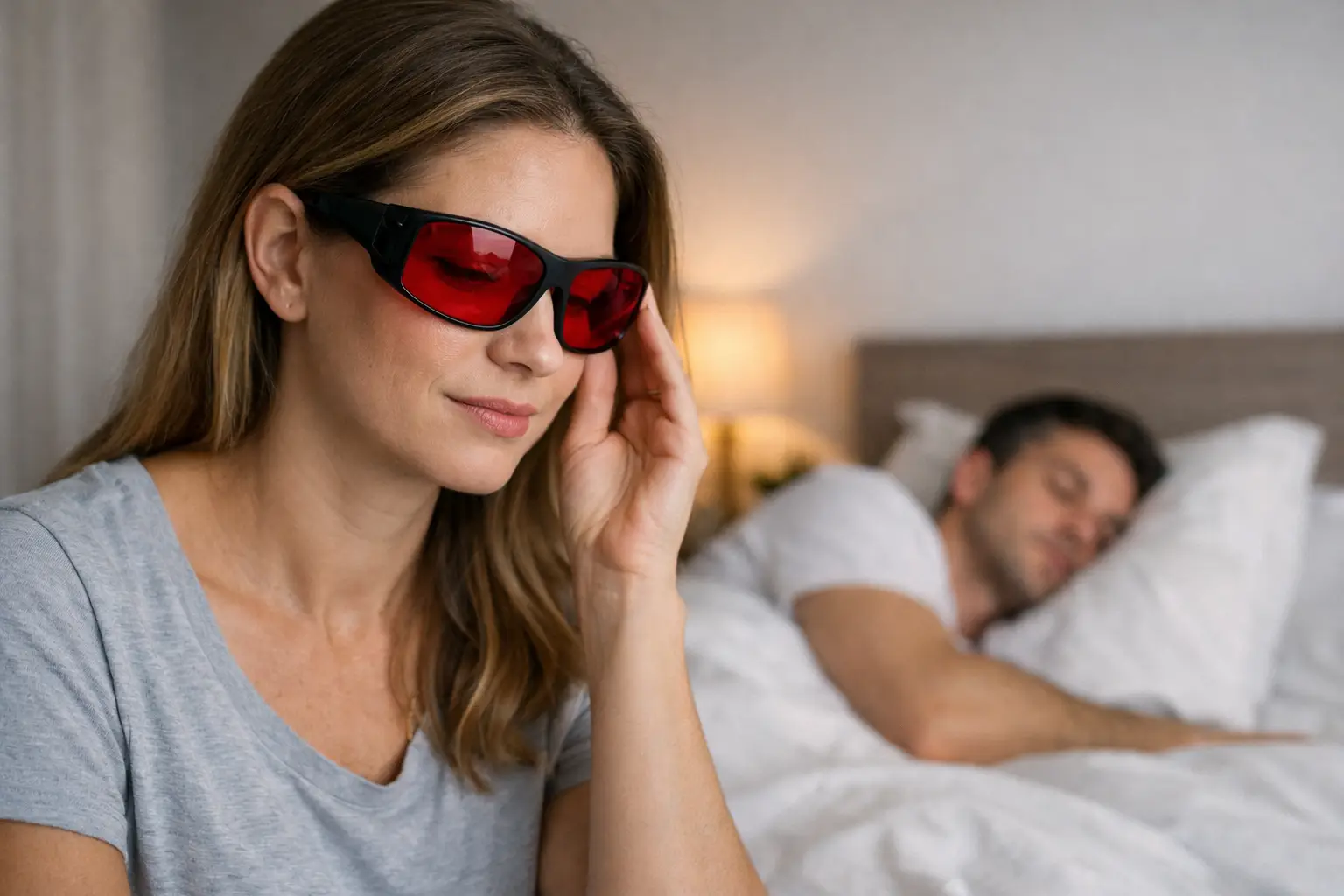
It is 22:30, the workday seems to be over, but there are still a few replies pending on the phone and a new episode of your favorite series is halfway through. Then a very practical question may arise: do red lens glasses help you sleep or are they just a stylish evening accessory? The short answer is that they can help many people, especially when evening screen time is unavoidable. But glasses do not replace a regular sleep rhythm or make insomnia disappear in one night.
The idea behind glasses with red or dark amber lenses is simple: they strongly limit the amount of evening blue and green spectrum light reaching the eye. It is this light that gives the brain a strong signal that the day is still ongoing. When there is a lot of bright screen light and white LED lamps in the evening, the calming down needed to fall asleep can be delayed.
Why does evening light affect sleep?
Our internal clock does not look at the clock on the wall. It largely responds to light. Bright light in the morning is helpful because it supports alertness and helps the body start the day. In the evening, however, the brain needs a different cue: less light, a slower pace, and approaching bedtime.
Evening bluish light can suppress the natural rise of melatonin. Melatonin is often called the sleep hormone, although it is more precise to say that it helps the body understand when the biological night is. If you sit late in front of a laptop, phone, or game screen, the brain receives light that resembles more a daytime environment than a dim evening.
This is where red lens glasses come into play. They don’t automatically make you sleepy, but create a lighting environment when working with screens or relaxing in the evening that disturbs the body’s evening rhythm less. Many users notice that their eyes feel calmer in the evening and it’s easier to go to bed after turning off the screen without the usual over-alertness.
Do red lens glasses help everyone sleep?
The effect depends on habits and what actually disturbs your sleep. If your biggest problem is late scrolling on your phone, computer work, video games, or a home office with bright lamps, a stronger filter red lens can be a very sensible solution. It is especially suitable for someone who simply cannot stop using screens two hours before sleep.
However, if sleep quality is mainly affected by stress, chronic pain, nighttime noise, a very irregular schedule, or too much caffeine in the afternoon, glasses alone will not solve the problem. They are part of creating a better evening routine, not a miracle cure. For persistent or severe sleep problems, it’s also worth talking to a doctor.
The results also depend on when you wear the glasses. If you put them on only after you have already been in front of a bright screen for an hour, the benefit is smaller than with consistent use. A good starting point is to wear the glasses about 1.5-3 hours before the desired bedtime. This way, evening light exposure decreases at a time when the body is preparing for rest.
A red lens is not the same as transparent screen glasses
Not all blue light glasses should be treated the same. Transparent or lightly tinted screen glasses are comfortable for daytime work. They can support visual comfort while preserving color perception and are suitable for meetings, studying, and everyday computer use.
Red lens glasses are primarily intended for evening use. Their strong tint filters light much more aggressively, so screen colors may appear reddish or inaccurate. This is a conscious compromise: if you need color accuracy for photo editing, design, or video work, do that before your evening glasses time. But if the goal is to watch a series, send messages, or finish late work so that sleep gets a better chance later, a stronger filter is often the right choice.
How to use red lens glasses to really benefit from them?
The easiest way is to tie the glasses to a specific evening habit. For example, put them on after dinner or from 8:30 PM. This way, you don’t have to decide every evening whether now is the right moment – the habit does the work for you.
It’s worth wearing the glasses not only in front of the phone or computer. Bright general lighting at home also affects what kind of light signal the eyes send to the brain. If you wear red lens glasses but sit under a very strong cold white ceiling lamp, the glasses will still help, but an even better result comes with warmer and dimmer evening lighting.
Try this rhythm for at least a week or two. One evening does not always give a clear answer, because sleep depends on the day, workload, movement, and many other factors. Notice if the time it takes to fall asleep changes, evening eye fatigue, or the feeling that thoughts spin too quickly after turning off the screen.
Practical evening routine for screen users
If work or studies mean long screen days, simply recommending ‘don’t use screens in the evening’ is not realistic. It is much more useful to make screen use less disruptive to sleep. Red lens glasses help do this without having to give up communication, entertainment, or late projects.
Start by reducing screen brightness and turning on the device’s evening mode. Then put on the red lens glasses when you want to start winding down. Prefer warmer lighting indoors if possible and leave an activity that doesn’t require a bright screen for the last half hour before sleep: showering, reading a paper book, preparing things for the next day, or gentle stretching.
Wake-up time also matters. If you go to bed at 11 PM one night and at 2 AM the next, no pair of glasses can completely balance the rhythm. Red lens glasses work best with as stable a sleep schedule as possible. It doesn’t have to be perfectly the same to the minute, but the difference between weekends and workdays should be reasonable.
Who do red lens glasses suit especially well?
They are a practical choice for remote workers who finish their computer work only in the evening, students during exam periods, gamers, editors, and anyone whose phone tends to come to bed with them. They may also be suitable for shift workers whose sleep schedule differs from the usual — although in such cases, light exposure and sleep timing should be planned especially consciously.
When choosing glasses, don’t just look at the filter. If the frame pinches, slides down the nose, or doesn’t suit your style, they will most likely end up in the drawer. Good evening glasses must be comfortable enough to wear for several hours and look good enough to put on even when someone sees you. sininevalgus.ee/ offers red lens glasses in different frame styles because an effective health habit must fit into real life, not just ideal evenings.
What not to expect from the glasses?
Red lens glasses do not compensate for a series of short nights. They do not neutralize late-night coffee or solve worrying thoughts that keep you awake. Likewise, better evening light does not mean you can endlessly stay in front of the screen at night – screen content, pace of work, and emotional stimulation also matter.
However, they give you a controllable step. If you have to use a screen in the evening, you can reduce one clear factor that may work against your body’s sleep rhythm. This is significantly better than hoping the brain will switch to rest immediately after a bright screen.
If you want to know whether red lens glasses are right for you, test them consistently in your usual evening routine. Notice how you feel not only when going to bed but also the next morning. A good night’s sleep doesn’t have to start with a perfect evening – sometimes it simply starts with giving your eyes and brain a timely signal: the day is ending.