
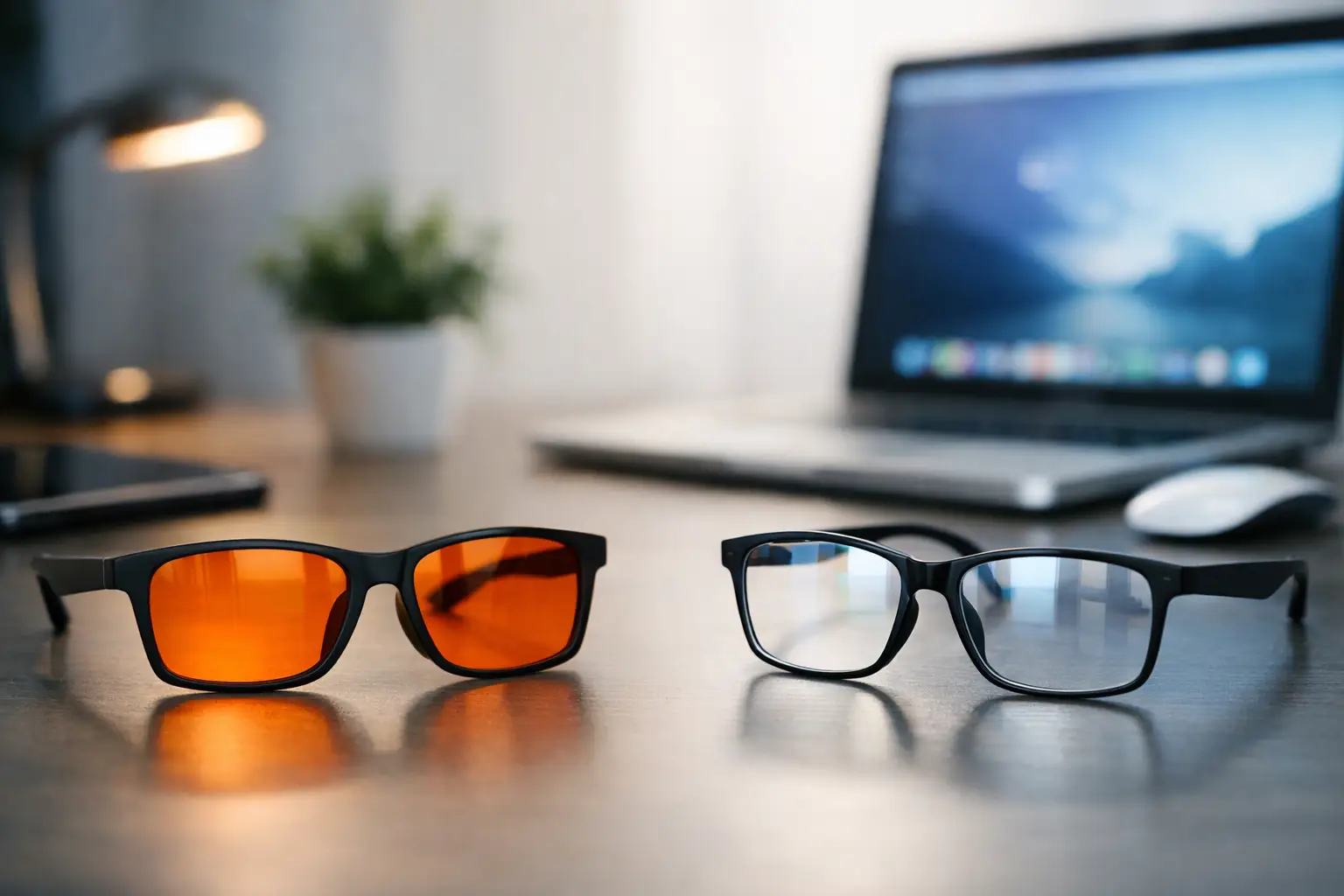
If you’re tired of the screen by evening, your eyes are itchy and your head feels heavy, the question arises quite quickly: blue light glasses vs screen glasses – are they the same thing or completely different products? This confusion is common because both terms are widely used in Estonia, but it is worth clarifying the difference for making a purchase decision.
The short answer is simple. Very often, they refer to the same product, just by different names. However, this does not mean that all models are equal or that each pair of glasses will provide the same result. The difference lies in how much blue light the filter actually blocks, when you wear the glasses, and what problem you want to solve.
Blue light glasses vs screen glasses – where does the difference come from at all?
In everyday use, screen glasses usually mean glasses intended for use in front of a computer, phone, tablet, and TV. Their goal is to make screen time more comfortable for the eyes. Blue light glasses typically refer more specifically to lenses that have a filter to help reduce some of the blue light coming from screens.
In practice, these terms overlap significantly. When someone says screen glasses, they usually mean glasses with a blue light filter. When someone says blue light glasses, they often mean glasses worn specifically while using a screen. So the question is not only about the name but also the level of the filter and the intended use.
Here comes an important nuance. Not all screen glasses may provide equally strong blue light protection, and not all blue light glasses are made for the same use case. One model is intended for daytime work in the office, another is better suited for evening use when the goal is to support not only eye comfort but also more restful falling asleep.
What is the main role of screen glasses?
The most practical purpose of screen glasses is to reduce visual strain related to the screen. If you look at a monitor for hours in a row, the problem is not just blue light. Factors like less frequent blinking, drier eye surface, bright light, contrast, and too long focus on one distance also play a role.
That’s why many people feel quick relief from fatigue, tension, and tingling when wearing screen glasses. The image may seem softer, eyes don’t get tired as quickly, and by the end of the day there is less desire to dim the light and escape from the screen.
If your main concern is eye strain during the workday, it’s worth looking primarily at quality screen glasses. Especially if you spend 6-10 hours every day between a laptop, an additional monitor, or a phone.
What do blue light glasses do differently?
Blue light glasses emphasize the filter that helps limit the amount of blue light reaching the eye. This can be important for two reasons. First, many people perceive the screen as less sharp and tiring. Second, reducing blue light in the evening can support a more natural evening rhythm, especially if you are used to being on your phone or computer before sleep.
This depends a lot on the level of filtering. Glasses with a light filter are great for daytime wear because they don’t change color perception too much and often look very discreet. Models with stronger filters may give the lenses a more noticeable tint and these are often used in the evening or late at night. If your goal is only to make the workday more comfortable, you don’t always need the strongest solution. However, if your concern is sleep quality and evening fatigue, it is worth paying much more attention to the filter level.
Who are screen glasses more suitable for?
Screen glasses are a good choice for a person whose day is spent in front of a monitor and who wants a quick, everyday solution. Office workers, students, designers, programmers, editors, and remote workers clearly belong here.
If you feel dryness in your eyes at the end of the day, tension in the forehead, mild headache, or need to rest your eyes, then screen glasses are usually the most logical first step. They are designed to make long screen hours more bearable and reduce eye strain.
For many, appearance is also important here. If glasses are used daily, they must match work attire, casual style, and video calls. Therefore, models that combine function and modern frame design are often preferred, rather than looking like a medical aid.
Who are blue light glasses more suitable for?
If you use screens especially a lot in the evening, then a blue light filter becomes more important than just daytime eye comfort. This concerns people who work shifts, study late at night, scroll in bed, or watch series and videos for several hours after work.
In such cases, blue light glasses may be a better choice because their function is more clearly focused on light filtering. If you choose the right level of protection, they can help make evening screen time gentler for both the eyes and how you feel.
At the same time, it’s worth being honest. If you have severe headaches, persistent eye pain, or blurry vision, glasses alone may not be enough. Sometimes the problem is with visual acuity, dry eyes, or working posture. A good pair of glasses helps a lot but does not replace a full set of work habits.
Blue light glasses vs screen glasses – how to really choose?
The best choice depends on when and why you need glasses. If you want relief during the workday, choose a model designed for long screen use and comfortable to wear all day. If your biggest concern is evening screen time and difficulty falling asleep, prefer a solution with a stronger blue light filter.
It’s worth paying attention to three things. First, the filter level – a filter that is too weak may not provide the desired feeling, while one that is too strong can make colors uncomfortable in daily use. Second, the quality of the lenses – a cheap and poor coating can cause more reflections. Third, fit – if the frame presses or slips down the nose, even a good filter will end up in the drawer.
This is where most wrong purchasing decisions are made. A person quickly searches for the word screen glasses, finds the first pair, and assumes that everything works. In reality, it’s always worth looking at what the specific model is designed for. Is it meant for daytime office work, evening use, or stronger protection?
Why don’t all users feel the same effect?
This is perfectly normal. Some people feel the difference already on the first day, others notice the change only within a week. The reason is simple – screen usage habits also differ.
If you work in a well-lit room, take breaks, and keep the monitor at the right distance, the effect of glasses may seem more subtle. But if you spend hours in a dry office, in front of a screen with high brightness, and blink rarely, a quality filter can provide very clear relief.
Time also matters. During the day, people mostly look for less eye strain. In the evening, in addition to that, they seek a calmer feeling. That’s why you cannot say that one designation is better than another. It’s more correct to ask which solution suits your daily schedule.
Common misconception: if the name is different, the product is different
Both terms are used in marketing because people search using different words. This does not automatically mean that there are two completely separate categories on the shelf. Often, it’s the same product group with different emphasis.
Screen glasses sound practical – a solution for screen users. Blue light glasses sound function-based – a solution for those looking for a filter. A smart buyer does not get stuck only on the name but looks at what the lens actually does.
If you want to be sure, choose a specialized seller who offers clearly described protection levels, different frame styles, and models that are really comfortable to wear daily. In Estonia, this is one of the reasons why sininevalgus.ee/ is the first stop for many – the selection is built specifically for screen users, not a random accessory.
When is it worth choosing a model with stronger protection?
If your day starts with a screen and ends with a screen, a regular day model might not be enough. The same applies if you work evening shifts, study for long hours during exam periods, or use your phone almost daily before sleep.
In such cases, you shouldn’t just look at whether the glasses are attractive. Of course, they need to look good because they are worn visibly. But if the goal is to truly reduce evening strain and support a better sleep rhythm, the filter must also have a substantive effect.
The good news is that you don’t have to choose between style and function. Modern models can be minimalist, trendy, and effective all at once. That is what truly makes them an everyday product, not just a purchase that ends up in the drawer.
If you’re stuck between two names, think less about the terms and more about your habits. Daytime work, evening scrolling, eye fatigue, sleep quality, and wearing comfort will give you the answer much faster than any label on the package.