
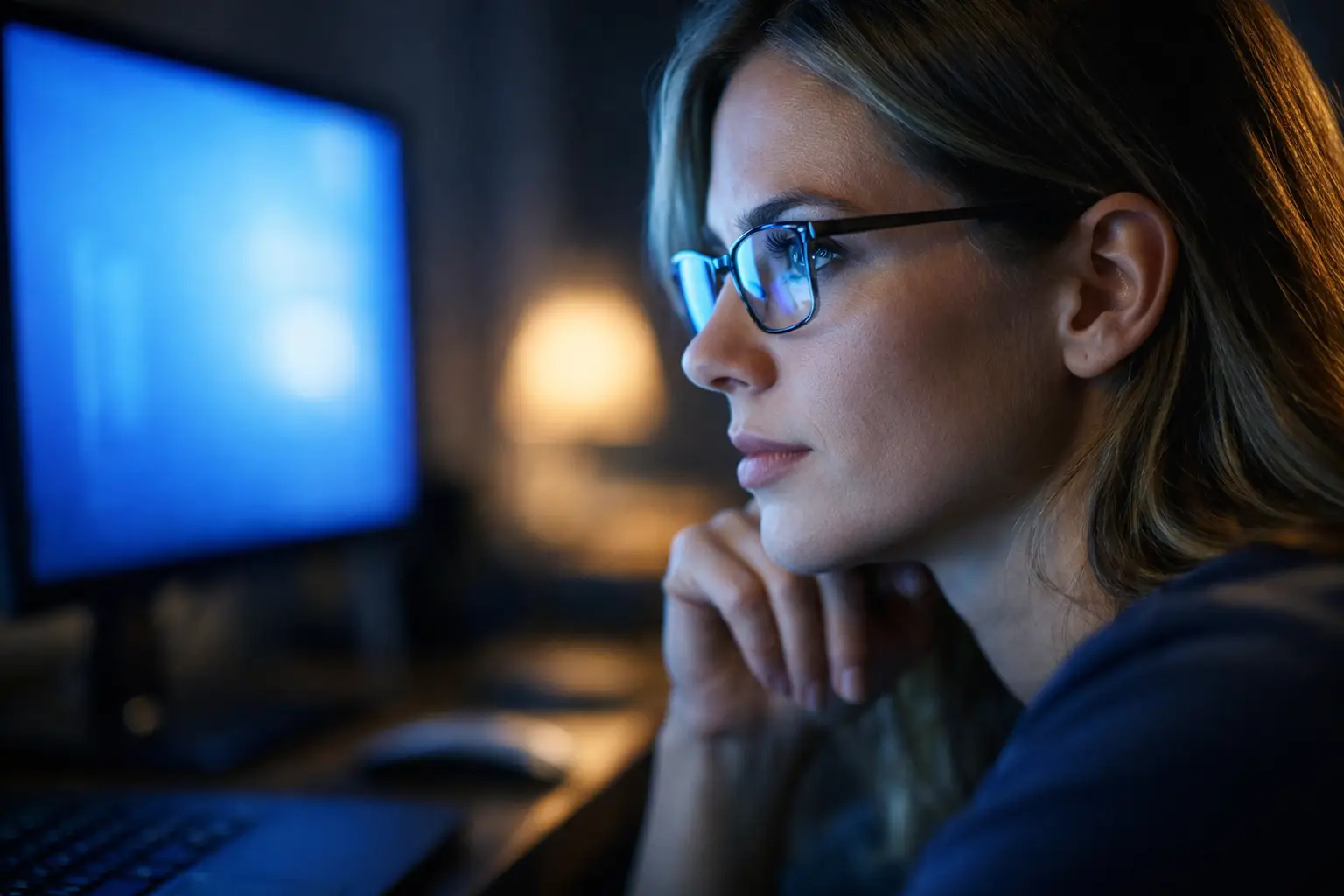
By the end of the day, the eyes no longer rest – the screen is still in front, but the focus swims, the gaze itches, and the head feels heavy. This is where the impact of blue light on the eyes becomes a very practical topic, not just a health story circulating on the internet. If you spend most of your day on the computer, phone, or tablet, you usually notice this effect before you can even name it.
What is blue light and why is there so much talk about it?
Blue light is part of the visible light spectrum. It comes from the sun, but also from LED lights, phones, laptops, monitors, and TVs. The problem is not that blue light itself is “bad.” During the day, it actually helps maintain alertness and supports the natural circadian rhythm.
The question is the amount, timing, and how long your eyes have to work continuously with the screen. If the day consists of several hours of close-up work, little blinking, and evening screen light, the discomfort no longer comes from one source. Blue light is part of a larger workload that affects the eyes’ well-being and often sleep as well.
The impact of blue light on eyes in everyday life
Most people do not describe it as “blue light causes pain.” Rather, they say their eyes are tired, dry, or sensitive by evening. Sometimes headaches, difficulty concentrating, and the feeling that the screen somehow becomes more aggressive towards the end of the day are added.
This happens partly because we blink less while looking at the screen. The eye surface dries out more easily, causing itching and the need to rub the eyes. Add bright screens, contrast, reflections, and long work sessions without breaks, and the situation quickly gets out of hand. The impact of blue light on the eyes, therefore, does not only mean the light itself but how the digital environment as a whole affects the eyes.
Some people experience the strain faster. If you have sensitive eyes, a tendency to dryness, contact lenses, or a long workday behind the screen, the difference is quite noticeable. The same applies to students, designers, editors, and remote workers who have to look at the screen not for tens of minutes but for hours in a row.
Does blue light cause permanent eye damage?
This is a place where it’s worth staying honest. In daily screen use, people talk more often about eye fatigue and discomfort than about direct permanent damage. Simply put – most people first experience the problem functionally, not as a diagnosis. Eyes get tired, dry out, and signal that the load is high.
This does not mean that the issue is trivial. If discomfort recurs every day, it affects work capacity, concentration, and recovery in the evening. If the eyes are constantly strained, being behind the screen also becomes more difficult. Many people simply get used to this discomfort, although they shouldn’t really.
If you have strong or persistent symptoms, it is worth checking your vision as well. Sometimes the cause is not just screen load, but an uncorrected vision problem, dry eye, or wrong working posture. A good solution starts by looking at the problem as a whole.
Why does evening screen time affect you especially badly?
In the evening, you are not only fighting eye fatigue. You are also fighting your sleep cycle. Blue light can suppress melatonin production, which means it affects how easily the body switches to sleep mode. The result is familiar to many – sleep doesn’t come right away, falling asleep drags on, the head feels twisted, and in the morning you are not really rested.
There is an important difference here. During the day, blue light can help you stay awake. Late in the evening, the same feature makes the situation worse. If you work in the evenings, scroll in bed, or watch long series before sleep, it’s not only your brain that reacts. The eyes also get another long load block at a time when the body would like to calm down.
That is exactly why many people look for a solution that could help on two fronts at once – reduce eye strain and make evening screen time less disturbing. When days are long and you can’t escape screens, this becomes a very real need.
How to understand that the screen is straining your eyes too much?
Typical signs are quite clear. The eyes sting, become dry or red. Switching focus from the screen to distance is slower. You may feel pressure around the eyes or notice that a headache develops by evening, even though the day was not physically hard.
Sometimes the sign is instead that you become uncomfortably alert in the evening. The body is tired, but sleep doesn’t want to come. In such a case, the issue is not only workload but also the type of light you get at the end of the day.
If these symptoms recur several times a week, it is no longer a coincidence. It is a sign that your current screen habits do not support eye well-being and recovery.
What really helps reduce the impact of blue light?
The simplest trick is to take screen breaks. Every 20 minutes, look into the distance for a moment and let your eyes change focus. It doesn’t sound like a big solution, but it works. Equally important is conscious blinking, especially in a dry office or air-conditioned room.
Adjusting screen brightness and contrast also helps. If the screen is significantly brighter than the room light, the eye has to work harder. In the evening, it is worth turning the light softer, as looking at the phone face at full power is a fairly sure way to irritate the eyes and delay sleep.
But honestly – for many, simply adjusting habits is not enough. If work or study means 6-10 hours of screen time a day, it makes sense to add protection that works with your routine. This is where blue light glasses come into play, also known as screen glasses.
Are blue light glasses really useful?
For the right user, yes. Especially if you spend long hours in front of a screen and feel eye fatigue, dryness, or evening over-alertness by the end of the day. The purpose of screen glasses is not to make you “immune” to screens, but to reduce the strain that accumulates over hours.
Many people first notice that their eyes feel calmer at the end of the day. Another change relates to the evening mood – the screen no longer feels as sharp and falling asleep may become easier. The result of course depends on when you wear the glasses and how strong protection is needed.
Here, it is important not to choose blindly. If you need a solution for the workday, screen glasses are the most logical choice. If the main concern is late evening screen time and sleep, a higher protection level red lens type solution may be more effective. This is not the same product with a different name, but a different usage logic.
When are regular screen glasses enough and when not?
If your biggest concern is eye fatigue during the workday, regular blue light glasses are usually a suitable start. They are designed for everyday wear, look good, and are well suited for office, school, or home office. The advantage is simple – you get protection without having to rearrange your day.
However, if the main problem is evening screen use and difficulty falling asleep, a stronger filter may be more sensible.Red lens solutionsare not for everyone or every moment, but when used correctly, they are a strong choice for those who work late, play games in the evening, or use screens right before sleep.
The practical question is not only “do they work?” but “when and for what do you need them?” This difference determines whether the purchase will be good or remain unused in the drawer.
Style matters more than it seems at first glance
Glasses are not worn for a single test day. They are worn every day. That is why design really matters. If the frame does not fit your face, feels uncomfortable, or does not match your style, even the best lenses will go unused.
A good pair of screen glasses is one you want to wear with work clothes, casual clothes, and during everyday activities. Function and appearance do not have to exclude each other. In fact, this is where a good choice is born – glasses that protect and at the same time look like part of your usual style, not a medical compromise.
sininevalgus.ee/ has clearly built this logic into its selection. When people are looking for a solution, they don’t want to choose between health and appearance. They want both.
When is it worth acting, not just waiting?
If you experience eye strain from screens at least a few evenings a week, then already now. If headaches, redness, or poorer sleep are added, then even more so. Such problems usually do not go away on their own if your work and study environment remains the same.
The good news is that relief does not require turning your life upside down. Often it is enough to adjust screen use, give your eyes breaks, and add the right glasses for the right situation. A small change in daily routine can make a surprisingly big difference in how your eyes feel in the evening.
Your eyes do a huge job every day. If the screen is part of your life, then protection is not an exaggeration, but a smart habit that helps maintain well-being, concentration, and sleep.