
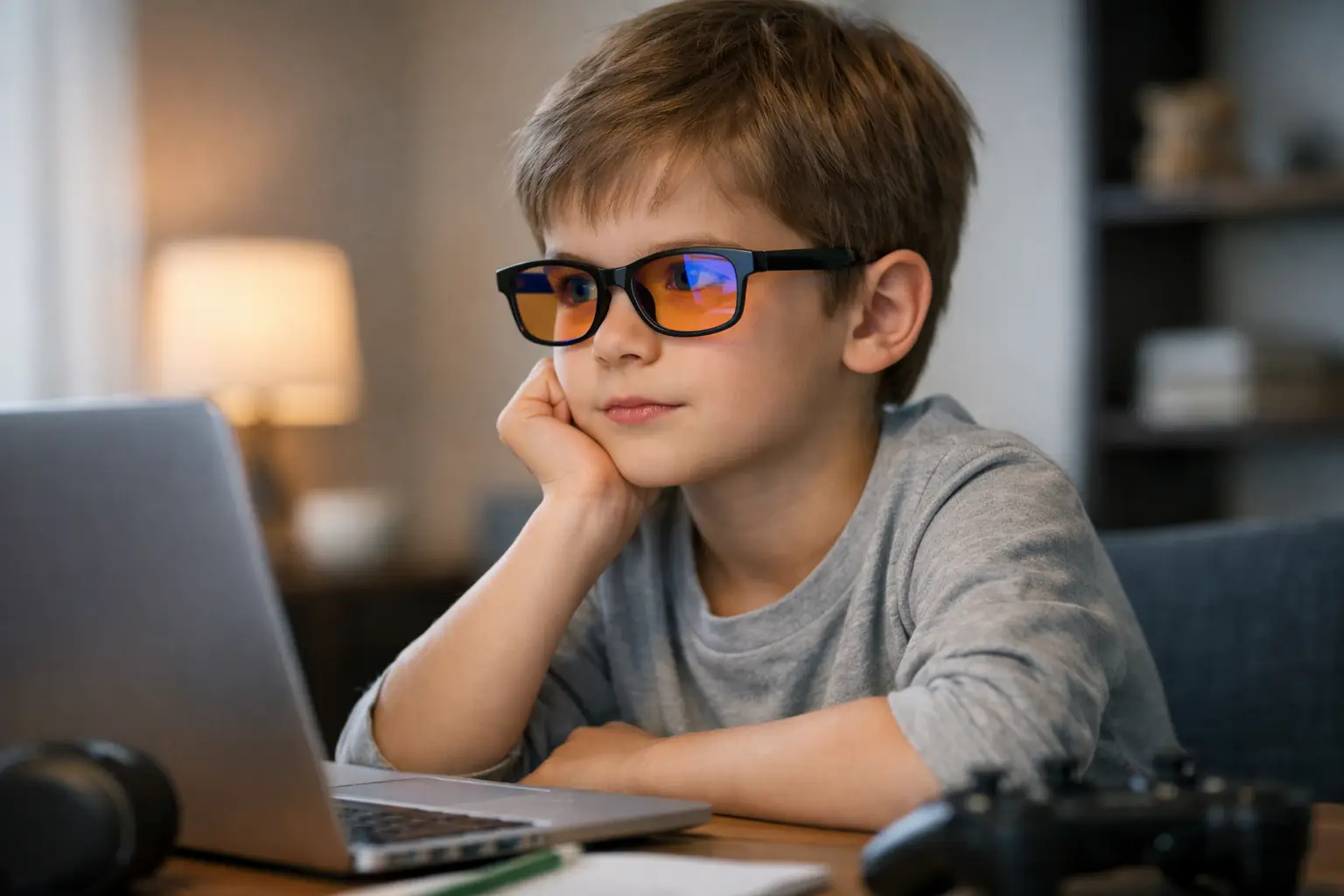
If a child rubs their eyes in the evening, complains of a headache, or simply becomes moody after extended screen time, parents usually look for a quick and reasonable solution. Blue light glasses for children are increasingly being discussed for this reason – not as a fashion item, but as a practical aid in families where learning, videos, games, and communication largely happen through screens.
The truth is simple: not all children need these glasses, but for many, they can be genuinely helpful. Especially when screen time is long, days stretch into the evening, and the eyes show signs of fatigue. The issue is not just the screen itself but how long, how close, and at what time of day it is used.
When are blue light glasses genuinely reasonable for children?
If a child uses screens mainly for a short period, spends plenty of time outdoors during the day, takes breaks, and has a calm evening routine, additional glasses may not make much difference. However, if schoolwork is done on the computer, free time continues on the phone or tablet, and videos are watched in the evening, the strain builds up quite quickly.
In such a rhythm, parents start noticing familiar signs. Eyes sting, the child blinks frequently, holds the screen too close, or says the image is tiring. Some complain of headaches, some just can’t calm down in the evening. These do not automatically mean the problem is only blue light, but they indicate that visual strain is significant.
Glasses that filter blue light can help reduce irritation from screens and make longer use more comfortable. Especially in the evening, when bright light has a more stimulating effect on the child and falling asleep is delayed. It’s not a miracle cure, but when used correctly, the difference can be quite noticeable.
What does blue light mean for a child?
Blue light is not inherently bad. It is also present in daylight, and the body needs it to support alertness and the daily rhythm. The problem arises more when a child receives a lot of it at the wrong time – for example, during late evening hours through strong screen light.
During the day, screens are part of learning and communication in modern life. In the evening, the same light can keep the brain too alert. As a result, falling asleep does not come easily, evening calming takes longer, and the next day starts tired. If such a pattern repeats, both the child and parent eventually feel it.
That’s why blue light glasses are primarily discussed in the context of comfort, eye well-being, and evening screen use. They don’t replace good habits but can be a very practical additional layer in situations where avoiding screens completely is not possible.
Blue light glasses for children do not replace good habits
It’s worth being honest here. If a child spends three hours straight on a tablet, sits in a dark room, and goes straight to bed afterward, no pair of glasses will solve the whole problem. Glasses can help reduce strain, but they work best in combination with simple habits.
It’s important that the screen is at a sufficient distance, the room is lit, and breaks are taken every now and then. Screen brightness also matters. Many children use devices with the brightness set too high, especially in dim lighting, which strains the eyes more than necessary.
For a parent, a good mindset is this: glasses are not an excuse for longer screen time but a tool to enable more sensible use. This way, expectations are clear, and the outcome is realistic.
How to choose the right screen glasses for a child?
For children, it’s not enough that the glasses simply look cute. They need to fit well, be lightweight, and stay comfortably in place even when the child moves, studies, or watches the screen in different positions. If the frame pinches or slips, the glasses quickly end up in the drawer.
A good choice depends on several factors at once. First, the right size. Frames that are too large slip down the nose; too small ones become uncomfortable. Second, the quality of the lenses and the filter balance. The child does not necessarily need a very dark tint if the goal is everyday use during learning or home screen time. For daytime wear, a moderate filter that doesn’t overly distort the image is usually suitable.
Third, it is worth checking whether the glasses also have UV-400 protection. It is not just a marketing detail, but adds value when a child wears glasses in bright environments. For a practical family product, it is good if one item does more than one thing.
And of course design. A child is more willing to wear glasses if they look cool, not like a medical obligation. The place where function and appearance meet is actually very important. That’s why many parents prefer models that look like regular trendy glasses.
Is the same solution suitable for every age?
No, it is not. For younger children, the key question is how much screen time they actually need and whether it can be reduced. If the child is preschool-aged, it’s worth first reviewing usage habits rather than assuming glasses will solve the situation. If screen time is short and well managed, extra glasses may not be needed.
The picture changes for school-aged children. Digital learning environments, homework, and socializing with friends mean that screens are just more present. For teenagers, late-night phone use is added, which is often the most problematic aspect for sleep. At this age, blue light glasses can already be a very relevant daily support.
So, the question is not just about age but usage patterns. The longer the daily screen time and the later it extends, the more reason there is to consider a more protective solution.
What results do parents most often notice?
The most common change is not that a child suddenly loves screens less. Rather, smaller but truly important differences are noticed. Eyes are less red in the evening, the child complains less about itching or headaches, and evening calming goes more smoothly.
Some children notice a difference within a few days, others take longer to adjust. This depends on how big the problem was before and how consistently the glasses are used. If they are only put on once a week, big changes should not be expected. If they are used regularly during studying and evening screen time, the effect is easier to notice.
It is also worth emphasizing that if a child complains of constant headaches, blurred vision, or holds the screen very close, vision should be checked in addition to glasses. Blue light glasses do not correct refractive errors nor replace an optometrist’s assessment.
What to avoid when buying?
The worst choice is a random cheap product that has no clear information about the filter or materials. Durability and wearing comfort are especially important for children. If the frame breaks quickly or the lens scratches immediately, a good idea just turns into an uncomfortable expense.
Also, don’t assume that the strongest filter is always the best. Excessive tinting can make visual perception uncomfortable during daytime use and the child may not want to wear the glasses. Balance is more important than an extreme promise. Glasses have to fit real life – for studying, home use, and if needed, also for evening time.
If you’re looking for a solution that the child will actually go along with, it makes sense to choose a specialized seller, who focuses on screen glasses, not just any random fashion accessory. sininevalgus.ee/ strength lies in the fact that the selection is based on specific needs – better well-being during screen time, not just a frame on a shelf.
So are blue light glasses for children a good buy?
If a child spends a lot of time in front of screens, especially in the evenings, then yes – very often it is a sensible purchase. Not because the glasses are a trend, but because they can reduce eye strain and support a calmer evening. It is a practical solution to a modern problem.
If screen time is smalland no worries, not every child necessarily has to wear them. But if it’s already noticeable at home that the eyes get tired, mood changes, or falling asleep takes longer, it makes sense to try something simple, wearable, and suitable for everyday life.
A good choice doesn’t just mean a filter. It means glasses that the child is willing to wear, that look good, and that work together with good habits. That’s when blue light glasses for children are most beneficial – not on paper, but in real days, real evenings, and real family rhythms.