
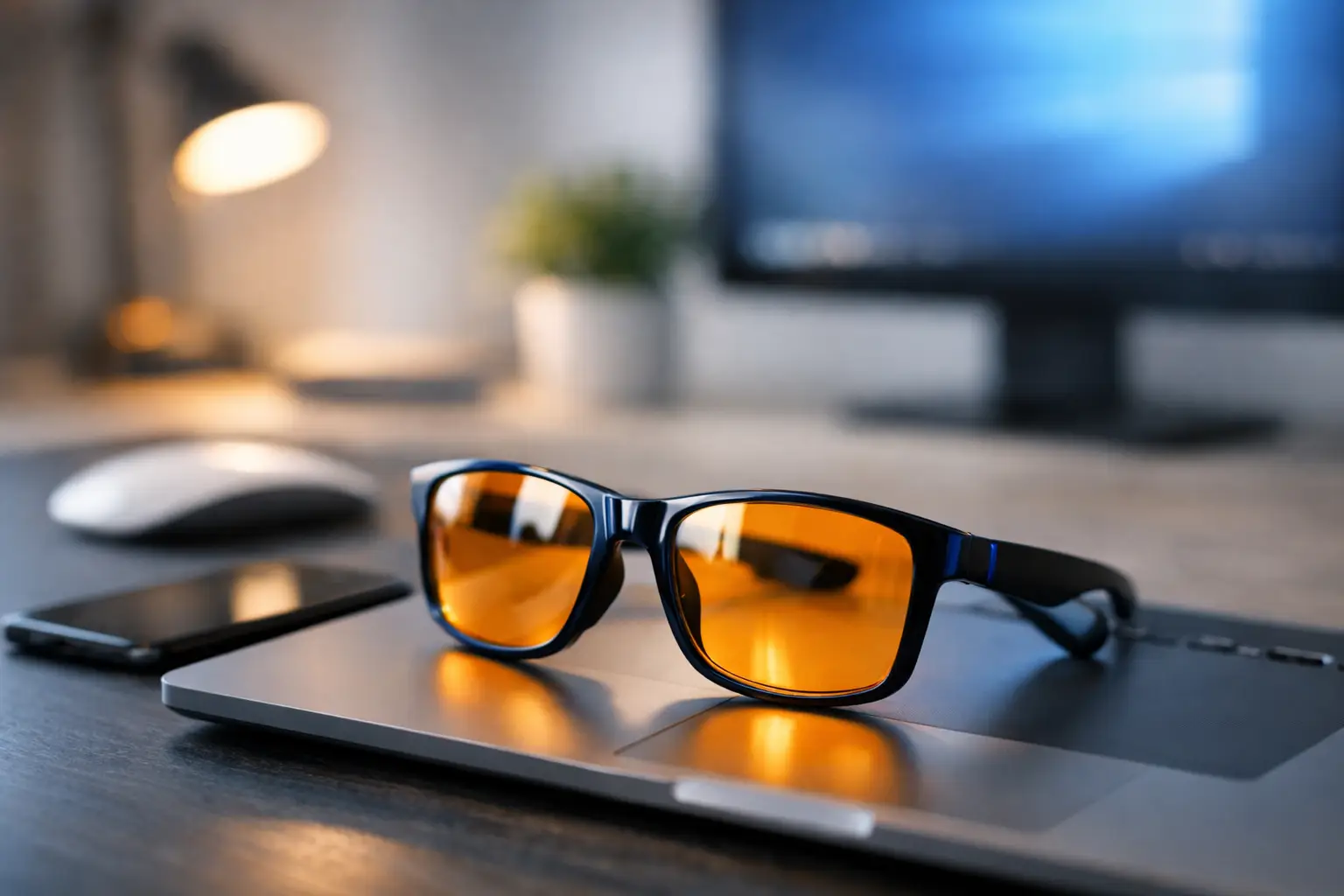
By the end of the day, the eyes don’t just signal—they protest. The screen has been in front of you since the morning, then the phone adds to it, and in the evening, there’s also time for series or games. It’s precisely this rhythm that makes blue light protection glasses for many not just a comfortable addition, but an everyday work tool.
If work, studies, or leisure largely take place in front of screens, it’s quite common to experience dry eyes, tingling, blurred vision, or headaches. This doesn’t automatically mean the problem is only the blue light, but the overall screen strain is very real. A good pair of glasses helps relieve this strain, especially when you choose a model that fits your usage habits and daily rhythm.
What are blue light protection glasses really?
Simply put, these are glasses whose lenses filter part of the blue light coming from screens and other light sources. The goal is not to make the world yellow or ruin the enjoyment of the screen. The point is that after prolonged use, the eyes should feel less strained and the evening stimulation shouldn’t extend too far into the night.
Here it’s worth being honest— not all blue light is bad. During the day, natural light helps maintain alertness and supports the body’s normal rhythm. The question arises more when the days are long, screen time is extensive, especially if you use devices a lot in the evening. That’s when filtering lenses can be a practical solution.
When do blue light protection glasses provide the most benefit?
The difference is felt most by people who work at a computer for several consecutive hours. An office worker, designer, student, programmer, editor, or remote worker doesn’t need a long lecture on what evening screen fatigue means. When eyes feel heavy at the end of the day and concentration drifts, it usually signals a lot of strain.
They can also be useful for those who use their phone in late hours. If sleep doesn’t come after long scrolling or after closing the laptop, and you still feel too alert, the reason may be general stimulation combined with light exposure. Glasses don’t improve sleep for you, but they can help create a calmer transition from workday to evening.
For children and young people, everything depends on usage habits. If screen time is high both at school and at home, glasses with a filter can help, but it’s equally important to take breaks, keep the screen at the right distance, and limit late-night use. Glasses are support, not an excuse for an even longer screen day.
What these glasses might help with – and what not?
Most often, blue light glasses are bought to relieve eye fatigue. This is also the most realistic expectation. Many people describe that their eyes sting less, are less red at the end of the day, or headaches occur less frequently. Some notice a difference within the first few days, others only after a couple of weeks.
Another important reason is the evening feeling. If you use screens late, lenses with higher protection can help reduce that bright, alert feeling that prevents the body from calming down. This is especially evident when the workday ends in the evening and the screen remains in use after that.
At the same time, don’t expect a miracle. If you have glasses with the wrong strength, poor working posture, dry air in the office, or very infrequent blinking, no blue light filtering lens will solve everything at once. Sometimes the reason is that the monitor is too bright or you sit too close to it. The best result comes when glasses are part of an overall smarter screen usage.
How to choose the right blue light protection glasses?
This is where most hasty decisions are made. People pick the first model that looks nice and hope all problems disappear. Actually, it’s worth considering three things – when you will use them, how strong protection you need, and whether you enjoy wearing them every day.
If you mostly work during the day at a computer, for many people a regular screen glasses that filters part of the blue light but keeps color perception natural are enough. These are suitable for the office, creative work, and everyday wear. But if the big concern is evening screen time and sleep quality, it’s worth looking at solutions with higher protection levels, including red lens type glasses, which is intended specifically for stronger evening filtering.
The frame is not just a matter of appearance. If the glasses press, slide down, or do not fit your face shape, they will just stay on the table. A good model must be light, stable, and something you actually want to wear. Style matters more than often thought because an everyday product has to fit your workday, clothing, and mood.
It is also worth paying attention to the overall quality of the lens. If the product also has UV-400 protection, it is a useful bonus. This is especially good for those who move a lot between different environments or want one pair for more versatile use.
Day glasses or stronger filter evening glasses?
This is where the answer is often: it depends. If your main goal is eye comfort during the workday, then you do not need a lens with the most aggressive filter. Too warm a tone can even be disturbing in some work, especially if you deal with photo, video, or design where color accuracy is important.
But if you look at screens a lot in the evenings and feel that your body does not go into rest mode at the right time, glasses with a stronger filter might be the smarter choice. These are not always meant to be worn all day but rather during certain hours when you want to reduce light load.
For some, the best solution is two different pairs. One for daytime working hours, the other for late evening. This is not an exaggeration if screens are a permanent part of your life and work.
Do cheap glasses do the same job?
Sometimes they work, sometimes they don’t. There are many models on the market where promises are big, but the actual level of filter information remains vague. If you don’t know how much and what kind of light the lens filters, it’s hard to understand what you’re paying for.
A low price may be suitable for testing, but for everyday wear, more than just the initial saving counts. Durable frame, comfortable fit, reliable lens, and clear product information truly add value. If you wear glasses every day for several hours, the quality difference becomes noticeable very quickly.
For the Estonian buyer, the practical side is also important. Fast delivery, an understandable selection, and knowledge of the local market make the purchase much easier. sininevalgus.ee/ is therefore a convenient choice for many – a specialized assortment, well-known presence in Estonia, and models that don’t look like a compromise between health and style.
How to get more benefit from glasses?
Even a good pair of glasses works better if a few habits are in place. Take short breaks during the day, occasionally look into the distance, and reduce screen brightness if it is uncomfortably high. If office air is dry, maintaining moisture or blinking more consciously helps more than you might initially think.
It’s worth wearing glasses consistently, not just when your eyes are already completely tired. As with many wellness products, the benefit is better realized through prevention than rescue after the fact. If you put glasses on right at the start of the workday or before evening screen time, the result is often more consistent.
Are blue light protection glasses a trend or genuinely useful?
The honest answer is that they are both. Yes, they have become a visible part of modern lifestyle, and people want practical products to look good. This does not make the product less useful. On the contrary – if glasses are stylish, they are worn more and more consistently.
Real benefit, however, depends on who uses them and how. If you spend most of your day in front of screens, feel eye fatigue, or notice that evening device use extends your sleep time, then this product is a very sensible investment. If screen time is small and no symptoms occur, the difference may not be as noticeable.
A good purchase does not start with whether the glasses are popular. It starts with whether your day needs them. If your eyes signal and your evening well-being is not as it could be, it’s wise to choose a solution that is easy to actually incorporate into everyday life.