
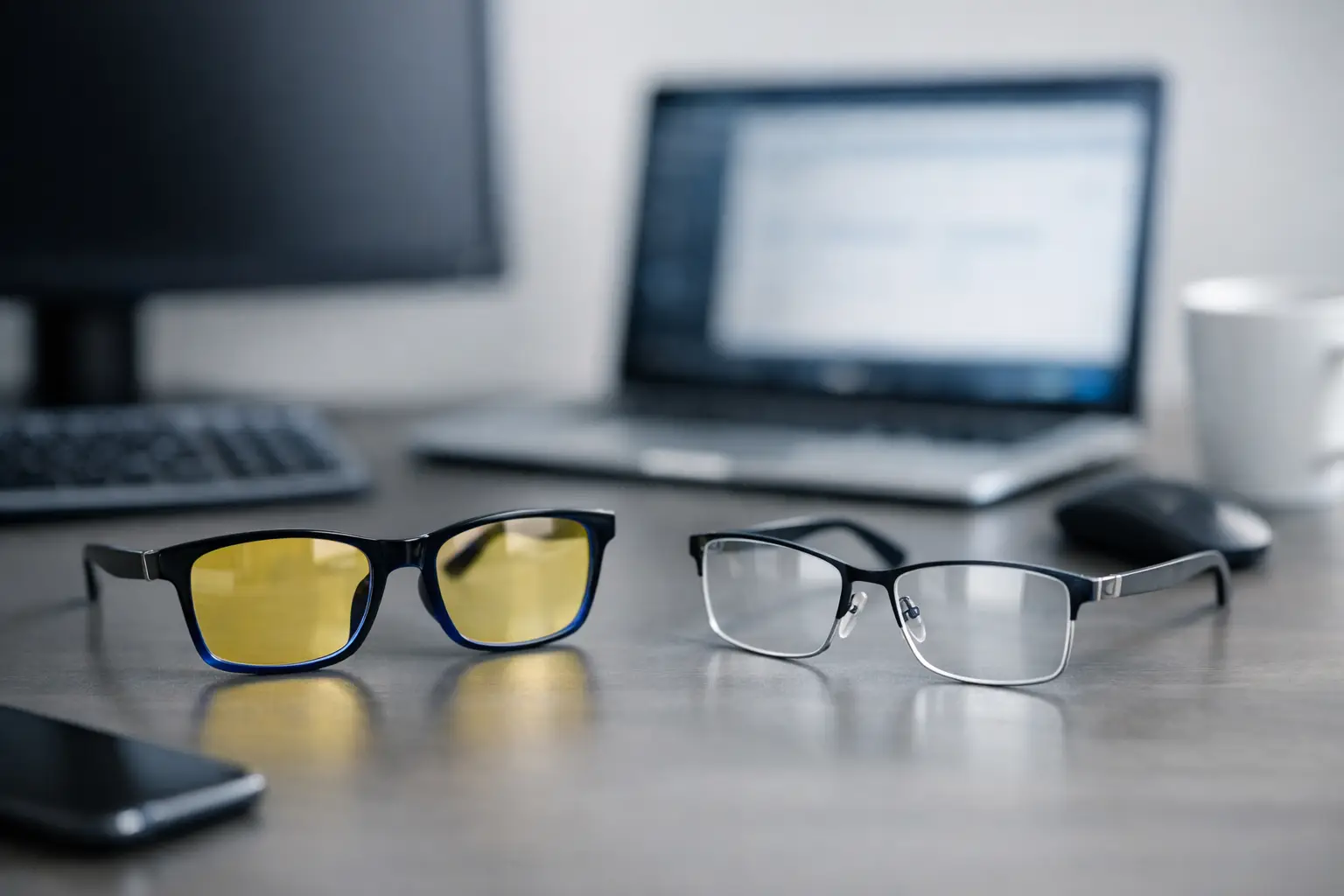
If by the end of the day you have felt that your eyes are dry, your forehead is tense, and stepping away from the screen doesn’t immediately improve how you feel, then the question of screen glasses or computer glasses is not trivial at all. Usually, people are actually looking for the same solution under these two names – glasses that help make screen time more comfortable, reduce eye fatigue, and support evening recovery.
The variety of names causes confusion. Some say blue light glasses, others screen glasses, and others computer glasses. From the consumer’s perspective, what matters is not what word is on the box, but what the glasses actually do. If you use a computer, phone, or tablet every day, choosing the right pair is more of a practical decision than a fashion question. The good news is that you don’t have to choose between function and appearance.
Screen glasses or computer glasses – is there even a difference?
In everyday use, these terms are very often used synonymously. Screen glasses directly refer to glasses intended for being in front of screens. Computer glasses sound narrower, as if only for desktop or laptop users, but in reality, the same type of glasses is usually meant, which are also worn when using phones, monitors, and other digital devices.
However, there is one nuance. Sometimes the term computer glasses is also used for glasses with a specific optical strength for medium distance – for example, an office worker who looks at a monitor a lot. In such cases, it’s not just about a filter, but also a prescription solution. Screen glasses, on the other hand, more often denote zero-strength or non-prescription glasses designed to reduce visual strain from screens.
So the short answer is simple: for most people, screen glasses or computer glasses are two names for the same thing. But if you need both vision correction and a screen-friendly solution at the same time, it’s worth checking the content behind the terms.
What do screen glasses really do?
The biggest value is not just about blue light, but overall comfort of use. During long screen time, we blink less, eyes dry out faster, and bright and high-contrast images tire our vision. Add a phone screen at the end of the workday, and it’s no wonder eyes are sore and the head feels heavy in the evening.
The goal of good screen glasses is to reduce this strain. They can help reduce the disturbing part of light coming from the screen, soften contrast, and make long viewing more comfortable. Many users notice that their eyes sting less, redness decreases, and their evening well-being is calmer. This doesn’t mean the glasses solve all problems instantly, but a properly chosen pair can make a very noticeable difference.
This is where quality comes into play as well. Not all glasses with filters are equal. If the lens or coating is weak, the result can be more cosmetic than substantial. When the protection level is well thought out and wearing comfort is good, an effect arises that the person really wants to use – not glasses that end up in a drawer after two days.
Who are screen glasses or computer glasses suitable for?
In short, almost everyone whose day involves a lot of screens. An office worker who spends eight hours in front of a monitor will feel the need quite quickly. The same applies to a student who reads study materials from a computer and ends the day on the phone. Creative workers, gamers, editors, and remote workers are also typical users.
But are they needed even when vision is good? Often yes. Screen glasses are not only for those who have poor eyesight. They are also intended for those who see well but feel visual fatigue. If by evening there is dryness, tension, or a feeling that the eyes are simply “used up,” it is quite a clear sign that the strain could be alleviated.
For children and young people, it largely depends on habits. If screen time is high, they too can benefit from it, but it is worth looking at the big picture – sufficient breaks, reasonable brightness, and sleep time are as important as the glasses themselves.
When to choose zero-strength glasses and when a prescription solution?
If you see well at both distance and near and your main concern is eye fatigue, then zero-strength screen glasses are usually the logical choice. They are suitable for people who want filter and comfort but do not need vision correction.
If you already have regular glasses or feel that looking at the monitor requires effort, you may need prescription computer glasses. Especially after the age of 40, close work becomes more demanding for many, and the monitor distance may no longer be the most comfortable range. In such a case, a filter alone is not enough; lenses that support the specific work distance are needed.
This is a place where it’s worth being honest. If headaches or eye fatigue actually come from the wrong strength, glasses with zero lenses won’t work wonders. On the contrary, a good result occurs when the filter solution and your vision needs work together.
What to look for when choosing besides the name?
The name in the product description is just the beginning. First, check if the glasses are designed for everyday screen use and if their protective properties are clearly stated. If the information is vague or it seems the emphasis is only on appearance, be cautious.
Secondly, comfort is important. If the frame presses on the bridge of your nose, slips down, or is too heavy, you won’t wear them consistently. And if glasses are not worn, they are of no use. Therefore, it is important that the frame fits the face shape and feels light even during hours of use.
Thirdly, consider when you will wear them the most. Lighter tinted solutions often suit daytime work, as they do not overly change the view. For evening use, a stronger protective solution might be more reasonable, especially if the goal is to support eye comfort as well as a calmer evening and better sleep.
Do blue light glasses also help with sleep?
For many users, the answer is yes, but again – it depends. If you spend a lot of time in the evening on your phone, laptop, or in front of the TV, the light from screens can keep you more alert than you want. In this case, suitable glasses can help reduce the evening strain.
At the same time, don’t expect glasses to completely compensate for a poor sleep routine. If you go to bed very late, respond to work emails in bed, and the bedroom is full of light, glasses alone won’t be enough. They work best together with normal evening habits.
The practical idea is simple: if your biggest concern is daytime eye fatigue, choose everyday screen glasses. If evening excitability also bothers you, it’s worth looking at solutions with stronger protection levels. sininevalgus.ee/ offers bothclassic screen glassesand higher protection options for those who want to get the most out of their evening screen time.
Common misconception – are these just a fashion accessory?
Good design does not make the product less effective. On the contrary, glasses that look good are much more likely to actually be used. People wear them at work, in cafes, meetings, and at home. When the frame fits the style, the habit becomes permanent.
This is important because the benefits of screen glasses come from consistency. If you wear them only when your eyes are already completely tired, the effect is limited. If they are comfortable and visually pleasant, they become a natural part of the day.
This way you understand that the choice is right
The right pair doesn’t constantly remind you that you’re wearing glasses. You just notice that it’s better to be at the end of the workday. Your eyes don’t squint as much, the screen feels softer, and evening fatigue is not as sudden. For some, the difference is immediate; for others, it comes over a few days or weeks.
If the initial feeling is bad, the frame bothers you, or the image feels unnatural, it doesn’t automatically mean that the category itself is unsuitable. Maybe that particular model, filter level, or frame shape doesn’t suit you. Like shoes — a wrong pair doesn’t prove all shoes are bad.
In the end, don’t get stuck on which word is more correct. The question of screen glasses or computer glasses is usually just a different way of describing the same need. What’s more important is that the glasses fit your day, your eyes, and your usage habits. If screens are a part of your everyday life, then well-chosen glasses are not an exaggeration but a smart way to maintain your well-being.